Practice data becomes course strategy the moment raw shot metrics feed a structured cycle of assess, analyze, adjust, and reassess. Most golfers collect numbers from their simulator sessions and stop there. The ones who actually lower their scores treat that data as the start of a conversation, not the end of one. Understanding how practice data becomes course strategy means knowing which numbers to act on, when to change your approach, and how AI tools can accelerate the whole process. This guide gives you a clear framework to do exactly that.
How practice data becomes course strategy: the 4-step cycle
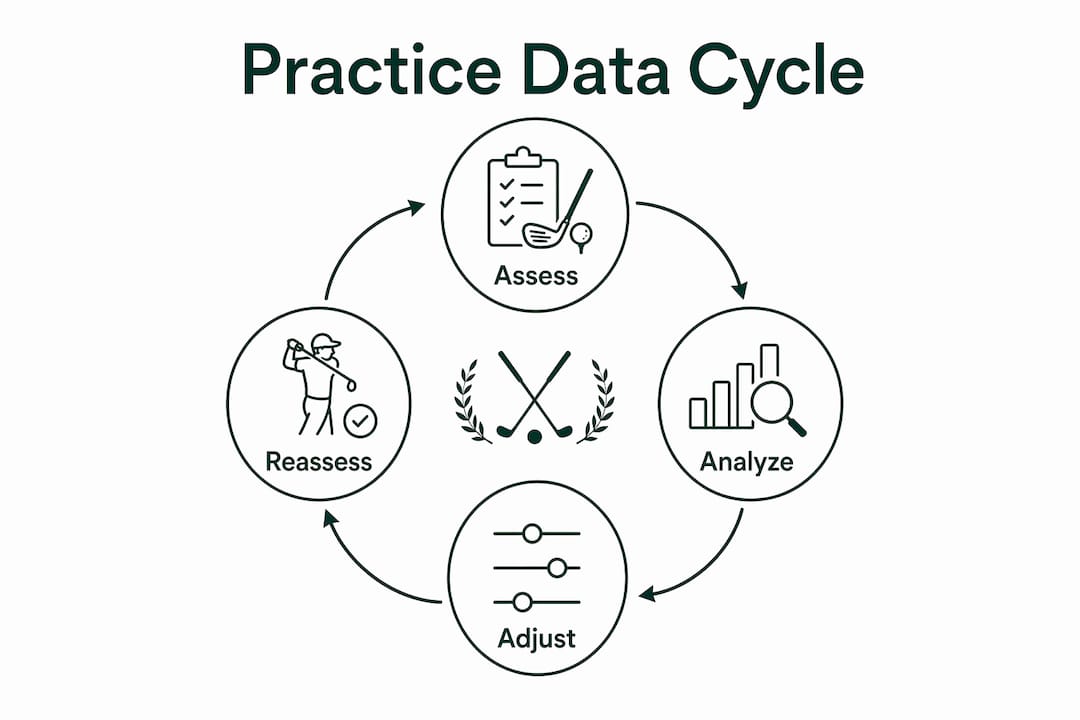
The foundation of data-driven course design is a four-step loop, not a one-time review. The cycle runs as: Assess, Analyze, Adjust, Reassess. Each step feeds the next, and skipping any one of them breaks the chain.
Assess: collect with a purpose
Collecting data without a goal produces noise. Before each practice session, name one specific performance question you want to answer. "How consistent is my 7-iron carry distance?" is a question. "How am I doing?" is not. Targeted collection gives you formative data you can act on before your next round, not just a record of what happened.

Analyze: find the real gap
Analysis means looking for patterns, not individual bad shots. A single mishit tells you nothing. When 60% or more of your practice attempts reveal the same performance gap, that gap is a signal to change strategy, not just repeat the drill. That threshold matters because it separates a real pattern from random variance.
Adjust: one change at a time
Micro-adjustments like tweaking ball position or stance width consistently outperform broad swing overhauls. High-performing golfers treat each session as a small iterative update, not a seasonal rebuild. Pick one variable, change it deliberately, and give it enough repetitions to generate new data.
Reassess: verify before moving on
The reassess step is where most golfers fall short. They make a change and assume it worked. Reassessing means measuring the same metric again and comparing results. If the gap closed, the adjustment worked. If not, the analysis phase needs another pass.
| Step | Key action | Goal | Common pitfall |
|---|---|---|---|
| Assess | Define one measurable question | Targeted data collection | Collecting everything at once |
| Analyze | Identify repeating error patterns | Pinpoint the real gap | Reacting to single bad shots |
| Adjust | Make one specific change | Test a targeted intervention | Changing too many things at once |
| Reassess | Re-measure the same metric | Confirm improvement | Skipping verification entirely |
Pro Tip: Limit each session to tracking three metrics maximum. More than that and you will spend more time reading numbers than hitting balls.
How do AI-driven tools improve the analysis step?
AI tools change the speed and accuracy of the analyze step more than any other part of the cycle. Manual review of shot data takes time and misses subtle patterns. AI closes that gap fast.
- AI models can identify performance gaps with up to 95.4% accuracy compared to manual review. That level of precision means fewer false signals and faster course corrections.
- AI predicts which practice modules will produce the biggest improvement, prioritizing your time where it counts most.
- Post-round AI reflections name specific deficiencies plainly rather than leaving you to interpret a wall of numbers. That specificity is what turns a data review into a practice plan.
- AI-driven platforms like Sim2coursecaddie map your actual shot outcomes against your intended targets, showing you the gap in visual, concrete terms.
- Automated pattern recognition catches trends across multiple sessions that you would never spot by reviewing one session at a time.
The key insight here is that viewing data as a dialogue rather than a static report transforms practice into a responsive process. AI makes that dialogue faster and more specific.
Pro Tip: Use AI recommendations as a starting point, not a final verdict. Your feel on the course adds context that no algorithm captures. Combine both for the best decisions.
What are the most common mistakes golfers make with practice data?
Data without a defined intervention is just grading yourself. Real improvement requires a targeted change aimed at a measurable gap. These are the mistakes that keep golfers stuck in the data collection phase without ever reaching course strategy implementation.
- Analysis paralysis from over-collection. Tracking dozens of unrelated variables causes cognitive overload and stalls progress. Beginners who monitor too many metrics at once rarely improve because they cannot identify which number to act on.
- Tracking without adjusting. Recording shot data session after session without making a specific change is the most common dead end. The data grows, the scores do not move.
- Treating practice as a seasonal overhaul. Waiting until the off-season to make big changes ignores the power of small iterative updates made weekly. Sustained improvement comes from frequent small corrections, not occasional large ones.
- Ignoring data quality. Duplicate records and entry errors corrupt your analysis. Weekly data quality checks reduce duplicate record rates and keep your metrics reliable. Garbage in, garbage out applies directly to your practice log.
- Failing to link data to a decision. Every metric you track should answer a specific question that drives a choice. If you cannot name the decision a metric informs, stop tracking it.
The fix for all five mistakes is the same: narrow your focus. Track fewer parameters and concentrate on the most immediate bottleneck in your game.
How to apply the practice-to-strategy cycle every week
A weekly routine makes the cycle concrete and repeatable. Here is how to structure it for continuous on-course improvement.
-
Identify your biggest gap. Review your last session's data and name the single metric furthest from your target. Carry distance consistency, fairway hit percentage, and proximity to the pin are all measurable starting points. Use session trend tracking to spot which gap keeps reappearing.
-
Diagnose the root cause. A short carry distance could mean swing speed, ball position, or contact quality. Each has a different fix. Do not adjust until you know which variable is actually driving the gap.
-
Make one targeted change. Choose one micro-adjustment and apply it for the full session. Ball position moved one inch forward, grip pressure reduced, or stance width narrowed by two inches are all testable changes. Micro-adjustments validated each session produce more reliable improvement than sweeping technique changes.
-
Re-measure and record. At the end of the session, pull the same metric you started with and compare. Log the result with a note on what you changed. This record becomes your evidence base for future decisions.
-
Visualize trends across sessions. Single-session data is a snapshot. Multi-session trends are the real story. A golf performance dashboard built from your simulator data shows whether your adjustments are holding up over time or fading after a few rounds.
The table below shows how to prioritize which gap to address first in any given week.
| Gap type | Priority level | Recommended focus |
|---|---|---|
| Repeating across 3+ sessions | High | Address immediately with one targeted change |
| Appearing in 1-2 sessions | Medium | Monitor for one more session before adjusting |
| Isolated to one round | Low | Log and watch; do not adjust yet |
| Improving trend | None | Maintain current approach and track |
Sim2coursecaddie supports this weekly cycle by letting you import shot data from any simulator, visualize it in a 3D driving range environment, and receive AI-driven club recommendations tied to real course conditions. That combination of personal shot data and AI analysis is what turns a practice log into a course plan.
Key Takeaways
Practice data becomes course strategy only when each session feeds a defined cycle of assessment, targeted adjustment, and verified improvement.
| Point | Details |
|---|---|
| Use the 4-step cycle | Assess, Analyze, Adjust, and Reassess every session to turn data into real change. |
| Act on patterns, not outliers | Change strategy only when 60% or more of attempts show the same gap. |
| One change per session | Micro-adjustments validated each session outperform broad technique overhauls. |
| AI accelerates analysis | AI tools identify performance gaps with up to 95.4% accuracy, far faster than manual review. |
| Track fewer metrics | Focusing on your most immediate bottleneck prevents analysis paralysis and drives faster improvement. |
Why data is a conversation, not a report card
Most amateur golfers treat their practice data the way they treat a scorecard: something to review once and file away. That mindset is the single biggest reason their numbers improve on the range and disappear on the course.
I have watched golfers spend hours logging shot data and then walk onto the first tee making the same decisions they made before they started tracking anything. The data never became strategy because they never asked it a question. They just collected answers to questions they had not asked.
The shift that actually works is treating every session's data as the opening line of a conversation. The data says something. You respond with one specific change. The next session tells you whether your response worked. That back-and-forth is what high performers use to clarify weaknesses after every round, not just at the end of a season.
AI tools are the best conversation partners I have seen for this process. They read the data faster than any human, name the gap plainly, and suggest a direction. But they do not replace your judgment about feel, course conditions, or competitive pressure. The golfers who improve fastest use AI to sharpen their questions, then answer those questions with their own hands and feet on the range.
— Jeff
Sim2coursecaddie Range3D: from practice data to course plan
Sim2coursecaddie built Range3D specifically for golfers who want their simulator sessions to mean something on the course.
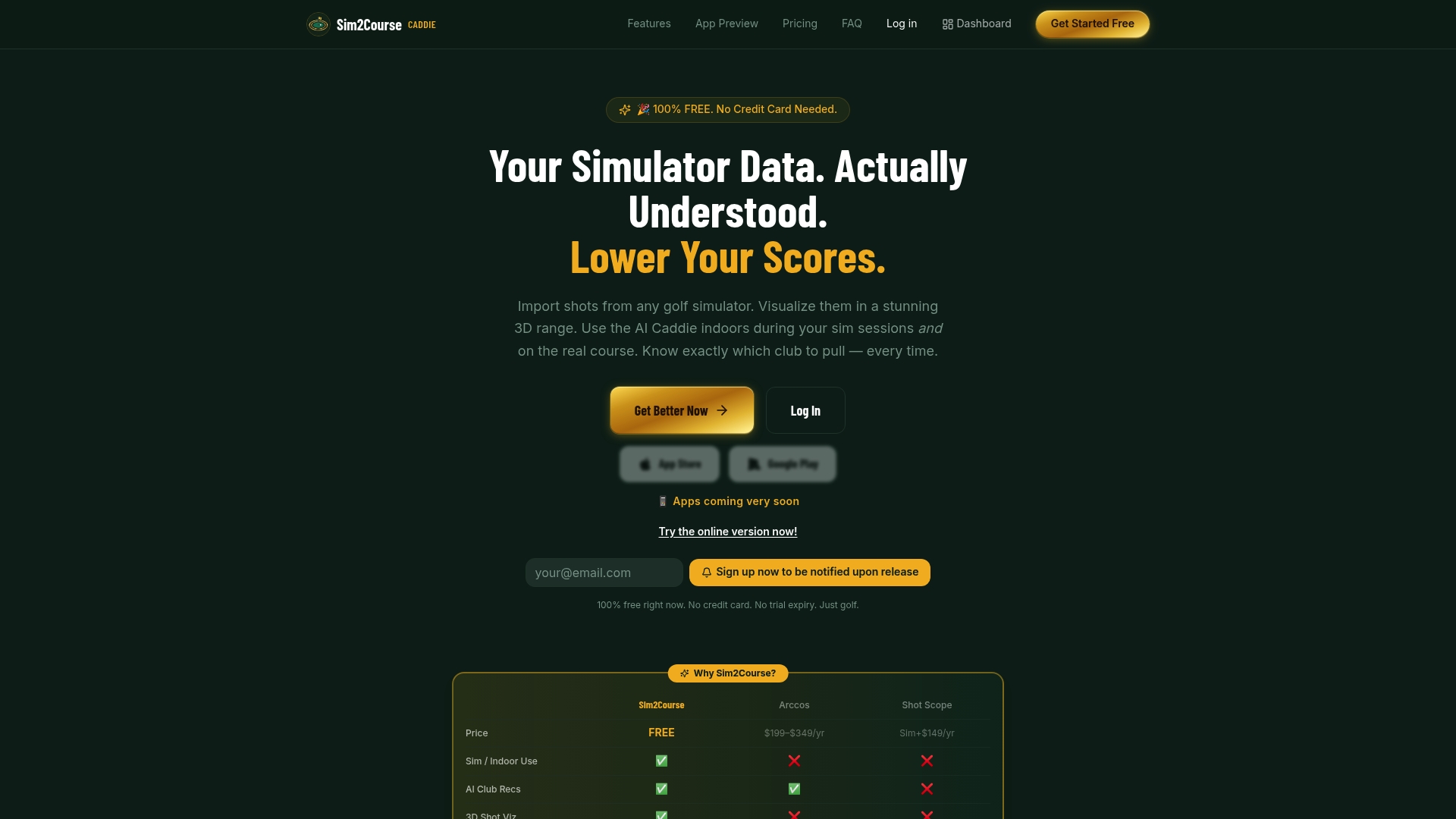
Range3D lets you import shot data from any golf simulator and visualize every swing in a 3D driving range environment. The AI-driven club recommendation engine maps your personal performance data against real-time course conditions, so the club you pull on hole 14 is based on your actual carry distances, not generic yardage charts. The platform is free, requires no additional hardware, and fits directly into the weekly assess-adjust-reassess cycle described throughout this article. If you are ready to turn your practice sessions into a real course plan, explore Range3D and see what your data has been telling you all along.
FAQ
What is practice data in golf?
Practice data in golf is any measurable output from a session, including carry distance, shot dispersion, club speed, and fairway accuracy. Simulator platforms capture this data automatically during each swing.
How often should I review my practice data?
A weekly review tied to one specific adjustment is more effective than monthly overhauls. Small, iterative updates validated each session produce sustained improvement faster than infrequent large changes.
What metrics matter most for course strategy?
The metric that matters most is the one showing the largest gap between your current performance and your target. Prioritize your most immediate bottleneck rather than tracking every available number.
How does AI improve practice data analysis?
AI tools identify performance gaps with up to 95.4% accuracy and name specific deficiencies faster than manual review. That speed and precision lets you spend more time adjusting and less time interpreting.
Can simulator data translate to real on-course improvement?
Yes. Simulator data captures the same swing mechanics and shot patterns that appear on the course. Platforms like Sim2coursecaddie map that data against actual course conditions to generate club recommendations grounded in your real performance history.