
Tracking session trends is the process of systematically monitoring your golf performance data across multiple practice sessions to identify meaningful patterns and drive real improvement. Most golfers collect data from a round or two, then move on without connecting the dots. That gap between data collection and trend analysis is exactly where progress stalls. Sim2coursecaddie addresses this directly by giving golfers the tools to import simulator shot data, visualize it over time, and act on what the numbers actually reveal. Understanding why tracking session trends matters is the first step toward turning practice into measurable gains.
Why tracking session trends matters more than single-session data
Session trend tracking is defined as the ongoing comparison of performance metrics across multiple sessions to detect patterns that no single session can reveal. A single round tells you how you played that day. A trend across 20 sessions tells you whether your 7-iron accuracy is genuinely improving or quietly declining.
Sub-group analysis is the core reason trend data outperforms raw averages. When you look at an overall average, flaws hide inside the number. Break that average into club-specific or condition-specific groups, and the real story appears. A golfer might average 68% fairway accuracy overall, but trend data could show that number drops to 51% with a driver in windy conditions. That distinction changes everything about how you practice.
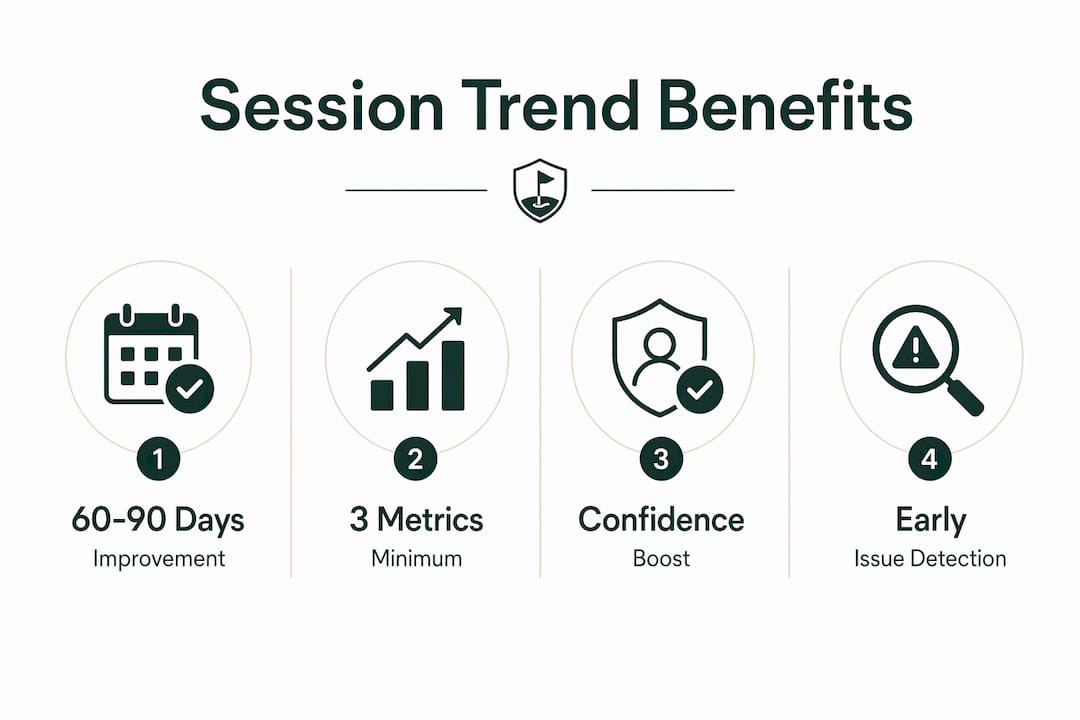
Systematic trend analysis can deliver measurable performance gains within 60–90 days by catching key issues before they become habits. That timeline matters because bad mechanics compound fast. Catching a creeping dispersion problem in week three is far cheaper in time and effort than correcting it in month six.
What trend data actually shows you
Trend analysis surfaces three things that single sessions cannot: positive momentum, early warning signs, and plateaus. Positive momentum shows up when a metric improves consistently across five or more sessions. Early warning signs appear as small, repeating dips in accuracy or distance control before they become obvious problems. Plateaus reveal themselves when a metric flatlines despite continued practice, signaling that the current drill is no longer producing growth.
Pro Tip: Track at least three metrics per session, including dispersion, shot accuracy, and club-specific distance, so trend comparisons have enough data points to be meaningful.
| Metric type | Aggregated average | Trend-based sub-group |
|---|---|---|
| Driver accuracy | 65% overall | 51% in wind, 78% in calm |
| 7-iron distance | 155 yards average | 148 yards when fatigued |
| Short game conversion | 42% overall | 31% in rounds over 3 hours |
Why intuition alone will not improve your golf game
Many golfers believe they already analyze their own trends. They remember a bad stretch with the wedge or a hot week off the tee. That is not trend analysis. Golfers who rely on gut feeling rather than systematic data capture the emotion of a session, not the reason behind a shift. Those are two very different things.
Failing to track session trends produces three specific and costly outcomes. First, early warning signs go undetected. A 3% accuracy drop per session feels invisible until it becomes a 30% drop over ten sessions. Second, training time gets wasted on drills that feel productive but produce no measurable change. Third, golfers lose competitive ground to players who do track their data and adjust faster.
The diagnostic gap is the real danger. Trend analysis explains why a performance shift happened. Without that explanation, golfers jump straight from noticing a problem to attempting a fix, skipping the diagnostic step entirely. That shortcut almost always leads to the wrong fix.
- You notice your iron shots are inconsistent.
- You assume your grip is the problem and spend three weeks adjusting it.
- Trend data would have shown the real issue: your ball position drifts forward under pressure, not your grip.
- Three weeks of grip work produced zero improvement because the diagnosis was wrong.
Pro Tip: Before changing any part of your swing or routine, pull at least six sessions of data and look for the repeating pattern. Fix the pattern, not the feeling.
How to track golf session trends effectively
Consistent data entry over time matters more than the volume of data collected at any one moment. Even 12 months of quality session logs, or smaller samples from high-frequency practice, reveal actionable patterns that prevent performance plateaus. The key word is consistent. Sporadic data creates gaps that make trends unreliable.
Golfers who track effectively focus on a defined set of metrics every session rather than recording everything. Chasing too many numbers creates noise. Tracking the right five metrics across 30 sessions creates signal.
Key metrics worth tracking every session
- Shot accuracy by club: Record the percentage of shots that land within your target zone for each club. This reveals which clubs are reliable and which need work.
- Dispersion pattern: Track how tightly your shots cluster. A widening dispersion over time signals a mechanical issue before it becomes a scoring problem.
- Swing mechanics notes: Log one qualitative observation per session about your swing feel. Paired with quantitative data, these notes explain why numbers shift.
- Distance consistency: Note average carry distance per club. Drops in distance often precede accuracy problems.
- Session conditions: Record wind, fatigue level, and time of day. These variables explain outliers and prevent misreading a bad session as a trend.
Recurring patterns across sessions are diagnostic. A single poor session is noise. The same weakness appearing in sessions three, seven, and eleven is a signal worth acting on. Sim2coursecaddie's raw data access lets golfers pull unprocessed session logs and run exactly this kind of cross-session comparison.
Pro Tip: Set a minimum of six sessions before drawing any conclusion about a trend. Fewer than six sessions produces patterns that are statistically unreliable and can lead to unnecessary swing changes.
How session trend insights give you a competitive edge
Trend tracking does not just fix problems. It also identifies what is already working, and that is equally valuable. Recognizing and reinforcing winning swing components is as important as correcting errors for sustainable skill development. Golfers who only track problems miss half the picture.
When you know which clubs consistently produce your best outcomes, you can build a game plan around those clubs rather than forcing shots with equipment that your data shows is unreliable for you. Sim2coursecaddie's equipment tracking feature connects club-specific session data to real course decisions, so your bag reflects what the numbers say, not what you hope is true.
Trend records also build justified confidence. A golfer who knows from 30 sessions of data that their 6-iron is accurate within 12 yards in crosswinds plays that shot with conviction. A golfer relying on memory plays it with doubt. Conviction and doubt produce different results under pressure.
| Approach | Training efficiency | Error detection | Confidence source |
|---|---|---|---|
| Intuition-based | Low, driven by feel | Reactive, after problems grow | Memory and emotion |
| Trend-based | High, focused on patterns | Proactive, catches early shifts | Verified data over time |
Tracking what works is as vital as tracking what fails. Golfers who maintain long-term trend records spot performance shifts weeks before those shifts affect their scores. That early detection is a real competitive advantage, especially in stroke play where small, consistent improvements compound over a season.
Sim2coursecaddie's 3D range visualization adds another layer by letting golfers see their shot patterns visually across sessions. Seeing a dispersion pattern widen over eight sessions in a 3D view is far more convincing than reading a spreadsheet column. Visual trend data accelerates the decision to act.
The pattern I kept ignoring until the data forced me to look
Most golfers I talk to are convinced they have a feel for their game. They know when they are playing well and when something is off. I believed the same thing for years. What changed my mind was not a bad round. It was a trend report that showed my wedge accuracy had dropped steadily over six weeks while I was convinced I was playing my best short game ever.
The feeling and the data were pointing in opposite directions. The data was right. My confidence in my wedge had grown because I was hitting a few spectacular shots per round and remembering those. The trend showed the misses were multiplying quietly in the background. Diagnostic trend analysis explained why: my setup had shifted slightly forward under pressure, and I had not noticed because the occasional great shot masked the pattern.
The lesson I took from that experience is that intuition is a lagging indicator. You feel the problem after it has already cost you shots. Trend data is a leading indicator. It shows the problem forming before it reaches your scorecard. Golfers who build the habit of reviewing their session trend insights regularly are not just better informed. They are genuinely harder to beat.
— Jeff
Sim2coursecaddie makes session trend tracking straightforward
Golfers who want to act on their data need a tool that collects, organizes, and visualizes that data without friction. Sim2coursecaddie imports shot data from any golf simulator, displays it in a 3D driving range view, and delivers AI-driven club recommendations based on your actual session history.
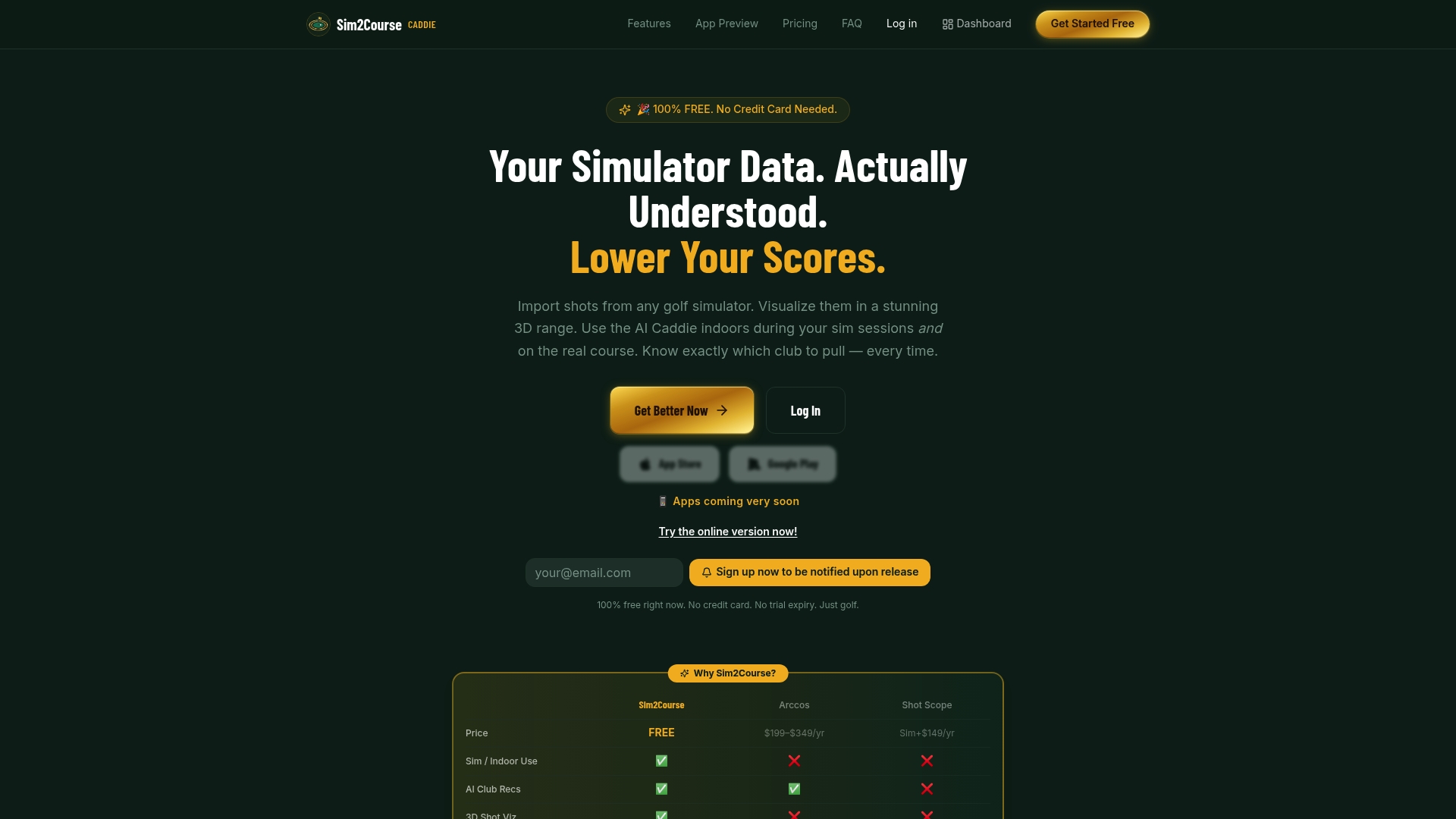
The platform is free to use, which removes the barrier that keeps most golfers stuck with spreadsheets or nothing at all. For golfers who want deeper analysis and advanced trend features, the upgrade options add capabilities that match the seriousness of your practice. Sim2coursecaddie also offers a 3D range view that makes visualizing shot patterns across sessions genuinely useful rather than just decorative. Your data should work as hard as you do on the range.
FAQ
What does tracking session trends mean for golfers?
Tracking session trends means systematically recording and comparing your golf performance metrics across multiple sessions to identify patterns. It goes beyond single-session results to reveal whether your accuracy, distance, or mechanics are improving, declining, or plateauing over time.
How many sessions do I need before trends become reliable?
A minimum of six sessions provides enough data to identify a meaningful pattern. Consistent data entry over time matters more than session volume, so quality and regularity of logging outweigh the total number of sessions recorded.
Why is intuition not enough for tracking golf performance?
Intuition captures the emotion of a session, not the reason behind a performance shift. Golfers relying on gut feeling miss early warning signs and often misdiagnose problems, leading to wasted practice time on the wrong corrections.
Which metrics should I track in every golf session?
Track shot accuracy by club, dispersion pattern, carry distance, swing mechanics notes, and session conditions. These five metrics together give you enough data to separate genuine trends from one-off outliers.
How quickly can trend tracking improve my golf performance?
Systematic trend analysis can produce measurable performance gains within 60–90 days by catching key issues early and directing practice toward what actually needs work.
Key takeaways
Tracking session trends is the most direct path from practice data to real scoring improvement because patterns across sessions reveal what single rounds never can.
| Point | Details |
|---|---|
| Trends beat averages | Sub-group analysis by club and condition exposes flaws that overall averages hide. |
| Intuition is a lagging indicator | Data catches performance problems weeks before they show up in your score. |
| Consistency over volume | Six or more sessions of quality data reveal reliable patterns; sporadic logging does not. |
| Track strengths, not just errors | Identifying which clubs and mechanics consistently work is as valuable as fixing weaknesses. |
| Diagnosis before correction | Trend analysis explains why a shift happened, which must come before any training change. |