
Personal shot data is the measurable record of your actual carry distances, dispersion patterns, and strokes gained across every club in your bag. Golfers who base club selection on this data consistently make better decisions than those relying on feel or range estimates. The gap between what you think you hit and what you actually hit is real. Average amateur 7-iron shots differ from best strikes by up to 35 yards. That gap is exactly where how personal shot data informs club choice becomes the most powerful tool you can use on the course.
What key metrics should golfers track to inform club selection?
Shot data analytics, the formal term for this practice, centers on three core metrics: carry distance, dispersion, and strokes gained. Each one tells you something different about your game and your bag.
Carry distance averages show you the reliable yardage each club produces across a full sample of shots, not just your best ones. Tracking average carry distances helps identify distance gaps in your bag where clubs overlap or leave yardage windows uncovered. A golfer who carries a 5-iron 175 yards on the range but averages 158 yards on the course has a 17-yard illusion that costs strokes on approach shots.
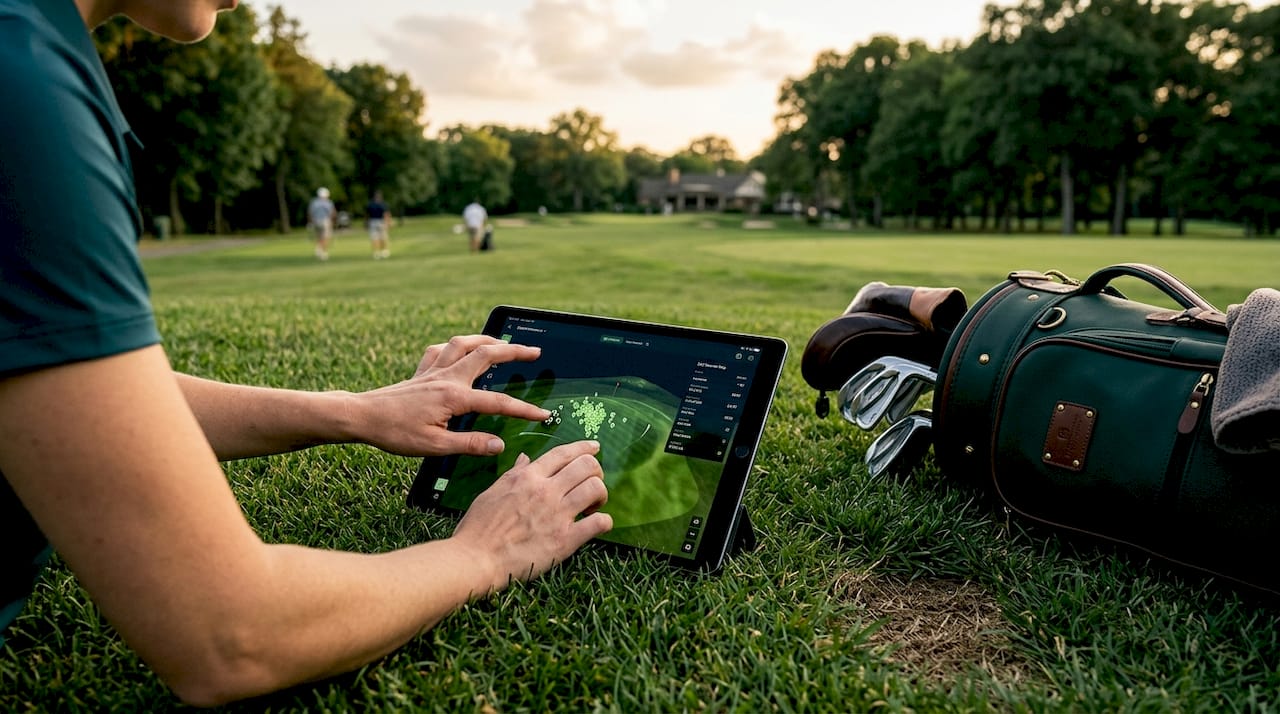
Dispersion patterns map where your misses land relative to your target. A golfer with a consistent left miss needs a different club profile than one who sprays shots in both directions. Dispersion shapes reveal whether you need a more forgiving club head or whether a workable design suits your ball flight.
Strokes gained is the metric that separates serious golfers from casual ones. It measures how each shot compares to a baseline for that distance and lie. Negative strokes gained on approach signals that your irons may need fitting attention or that your club selection in that yardage range is consistently wrong.
- Carry distance: track per club across a minimum of 5–10 rounds for reliability
- Dispersion: note left/right and short/long miss tendencies by club
- Strokes gained: segment by tee, approach, and short game to find the weakest area
- Data collection tools: GPS watches, shot tracking sensors, launch monitors, and simulator apps like Sim2coursecaddie
Pro Tip: Never use your longest carry of the season as your planning distance. Use your median carry across your last 10 rounds. That number is what actually shows up when the pressure is on.
How does personal shot data improve club selection over traditional methods?
Traditional club selection relies on yardage books, gut feel, and remembered best shots. Data-driven selection replaces all three with evidence from your actual performance history.
The clearest proof comes from club category comparisons. Hybrids outperform long irons by 11–16 feet closer proximity to the hole, tighter dispersion by 10–15 feet, and 11–14 yards more distance out of the rough for all skill levels. A 10-handicap golfer who switches from a 4-iron to a hybrid sees a 6% improvement in greens hit. That is not a marginal gain. It is the difference between a birdie putt and a chip shot.
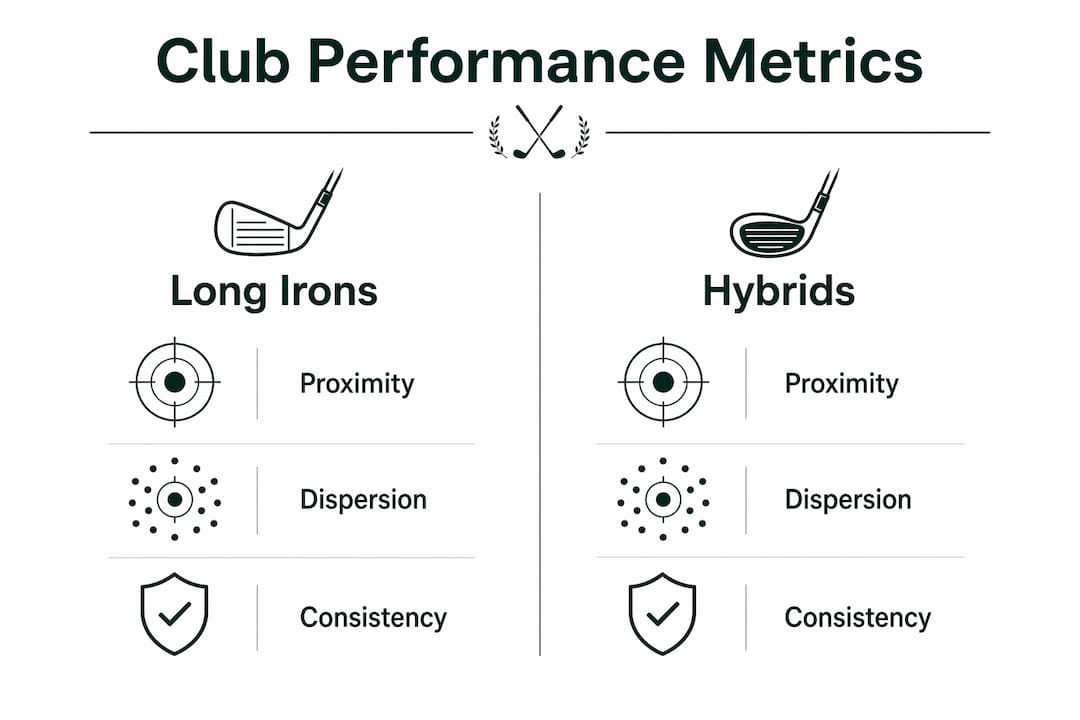
| Metric | Long irons (3, 4, 5) | Hybrids |
|---|---|---|
| Proximity to hole | Baseline | 11–16 feet closer |
| Dispersion width | Baseline | 10–15 feet tighter |
| Distance from rough | Baseline | 11–14 yards longer |
| Green-hit rate (10 hdcp) | Baseline | +6% improvement |
Strokes gained analytics sharpen this further. A golfer losing strokes on approach from 150–175 yards can pinpoint whether the problem is club selection, swing mechanics, or both. Evidence-based decisions using strokes gained transform equipment choice and practice priorities for improved scoring. That is a fundamentally different process than guessing which iron feels right.
Environmental factors add another layer. Effective Playing Distance accounts for air density, wind, humidity, and elevation alongside your personal launch data. AI-powered tools like FlightScope i4 integrate these variables to produce a club recommendation that reflects actual conditions, not just raw yardage. A 150-yard shot into a headwind at altitude plays nothing like a 150-yard shot downwind at sea level.
"Tour pros and serious amateurs use personal shot data and environmental adjustments for precise club recommendations each shot." — MyGolfSpy
What practical steps can golfers take to apply shot data for better club decisions?
Applying your data starts with building an accurate bag map. This is a simple document that lists every club alongside its median carry, typical dispersion, and strokes gained contribution. Once you have it, club selection on the course becomes a lookup, not a guess.
- Collect a reliable sample. Play 5–10 tracked rounds before drawing conclusions. A 5–10 round data review cycle is the recommended minimum to ensure reliability and track improvement.
- Map your bag. Record median carry distance and dispersion width for each club. Flag any yardage gaps between clubs greater than 15 yards. Systemic gaps where clubs overlap or leave yardage windows uncovered are prime targets for club adjustments.
- Prioritize your weakest strokes gained segment. If you lose the most strokes on approach, focus your club decisions and fitting attention there first. Tracking tools like the My Bag feature in Sim2coursecaddie let you evaluate which clubs are earning their spot based on actual strokes gained data.
- Add environmental context. Before each shot, factor in wind, elevation change, and lie. Environmental adjustments combined with personal launch metrics produce more situation-aware club decisions than simple yardage measurements.
- Review and update after every 5 rounds. Your data ages. A swing change, a new club, or a fitness shift all alter your numbers. Treat your bag map as a living document, not a one-time project.
Pro Tip: Use a 3D shot visualization tool to see your dispersion patterns mapped spatially. Seeing a cluster of misses 20 feet right of the flag on 7-iron approaches is far more convincing than reading a number in a spreadsheet.
What common pitfalls do golfers face when using shot data for club choice?
Data is only as good as how you use it. Several common mistakes undermine the value of even well-collected shot data.
- Relying on best shots instead of averages. Many amateurs overestimate carry distances significantly because they anchor to memorable long shots rather than typical ones. Your club selection should reflect what you do most often, not what you did once on a perfect lie.
- Drawing conclusions from too few rounds. Three rounds of data is not a pattern. It is noise. A single bad week with a 6-iron can make the club look worse than it is. Wait for a proper sample before making fitting decisions.
- Ignoring environmental conditions. Raw yardage data collected in calm conditions does not transfer directly to a windy coastal course. Accumulating shot data in realistic playing conditions reveals true performance patterns not visible in range or simulator practice alone.
- Overfitting to short-term trends. A hot stretch with a 4-hybrid does not mean you should abandon your 4-iron forever. Look for patterns across at least 10 rounds before making permanent bag changes.
- Treating data as the only input. Feel, course knowledge, and shot shape preference still matter. Data tells you what is probable. Your judgment determines what is right for the specific shot in front of you.
Key takeaways
Personal shot data replaces guesswork with evidence, and the golfers who act on it consistently make better club decisions and shoot lower scores.
| Point | Details |
|---|---|
| Track the right metrics | Carry distance, dispersion, and strokes gained are the three metrics that directly inform club selection. |
| Use averages, not bests | Base every club decision on median performance across 5–10 rounds, not your longest or best shots. |
| Hybrids beat long irons | Data shows hybrids land 11–16 feet closer to the hole than long irons for all skill levels. |
| Add environmental context | Effective Playing Distance accounts for wind, elevation, and air density alongside your personal launch data. |
| Review data regularly | Update your bag map every 5 rounds to reflect swing changes, new clubs, or fitness shifts. |
Why I trust data over instinct every time
I have watched golfers spend thousands on new equipment based on a feeling, then wonder why their scores did not change. The answer is almost always the same. They bought clubs based on what they wished they could do, not what their data showed they actually do.
The shift happens when you see your own numbers. A golfer who discovers his real 6-iron carry is 158 yards, not 170, stops trying to reach a 165-yard par 3 with that club. He grabs the 5-iron, hits the green, and makes par. That is not a complicated insight. It is just honesty backed by evidence.
What I find most underused is tracking multiple clubs across a full season. Most golfers track their driver obsessively and ignore their mid-irons. But strokes gained data consistently shows that approach play is where the majority of scoring improvement lives for golfers in the 10–20 handicap range.
Data does not replace feel. It informs it. The best club decisions I have seen come from golfers who know their numbers cold and then trust their instincts within that framework. That combination is hard to beat.
— Jeff
How Sim2coursecaddie puts your shot data to work
Golfers who want to move from raw numbers to real club decisions need a system that connects the two.
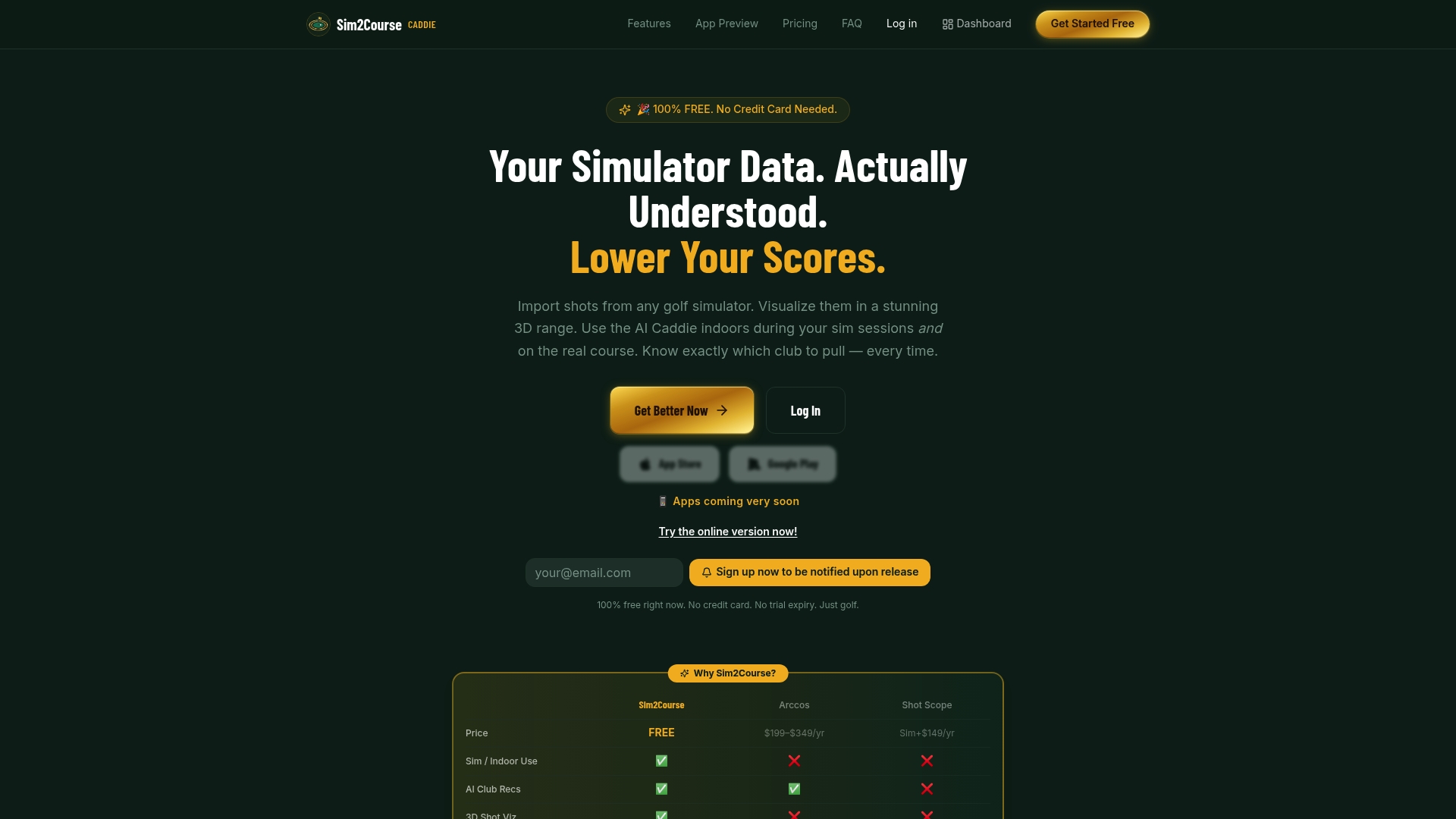
Sim2coursecaddie imports shot data from any golf simulator, maps it across a 3D driving range, and generates AI-driven club recommendations based on your actual performance patterns and live course conditions. The club recommendation workflow built into the platform walks you through bag mapping, strokes gained analysis, and situation-specific club advice. Golfers who want deeper analysis can access advanced AI analytics through the Sim2coursecaddie upgrade, which adds precision fitting insights on top of your existing shot history. The core platform is free, which means there is no barrier to starting.
FAQ
What is personal shot data in golf?
Personal shot data is the recorded output of your actual shots, including carry distance, dispersion, and strokes gained, collected across real rounds or simulator sessions. It reflects your typical performance, not your best-case performance.
How does shot data improve club selection?
Shot data replaces distance estimates with measured averages and reveals dispersion patterns that show which clubs produce the most reliable results for your swing. Strokes gained metrics pinpoint exactly where strokes are lost and which clubs need attention.
How many rounds of data do I need before making club decisions?
A minimum of 5–10 tracked rounds is recommended before drawing conclusions about club performance. Fewer rounds produce unreliable patterns that can lead to poor equipment decisions.
Should I use simulator data or on-course data?
Both are useful, but on-course data reflects real conditions including wind, lie, and pressure. Shot data in realistic playing conditions reveals performance patterns that simulator practice alone cannot capture. Sim2coursecaddie bridges both by importing simulator data and applying it to real course scenarios.
What is strokes gained and why does it matter for club choice?
Strokes gained measures how each shot compares to a statistical baseline for that distance and situation. A negative strokes gained value on approach shots signals that your iron selection or iron fitting needs attention, making it the most direct data signal for club decisions.