A structured club recommendation workflow is the single most reliable way to convert practice performance into consistent tournament results. Competitive golfers who treat club selection as a day-of decision leave scoring on the table. The club recommendation workflow tournament prep process works best when it starts four to six weeks before competition, integrates real shot data, and locks in equipment choices well before the first tee. Sim2coursecaddie gives you the data layer to make that process repeatable and grounded in your actual numbers, not guesswork.
What are the essential tools and data inputs for a club recommendation workflow?
The right tools define the quality of your club selection process before a single ball is struck in competition. You need three categories of input: shot data from practice sessions, course condition variables, and a stable equipment profile.
Shot data is the foundation. Without it, club recommendations are based on feel rather than fact. Sim2coursecaddie lets you import shot data from any golf simulator, then visualizes that data in a 3D range environment so you can see carry distances, dispersion patterns, and miss tendencies by club. That level of detail is what separates a data-driven club selection process from a gut-feel one.
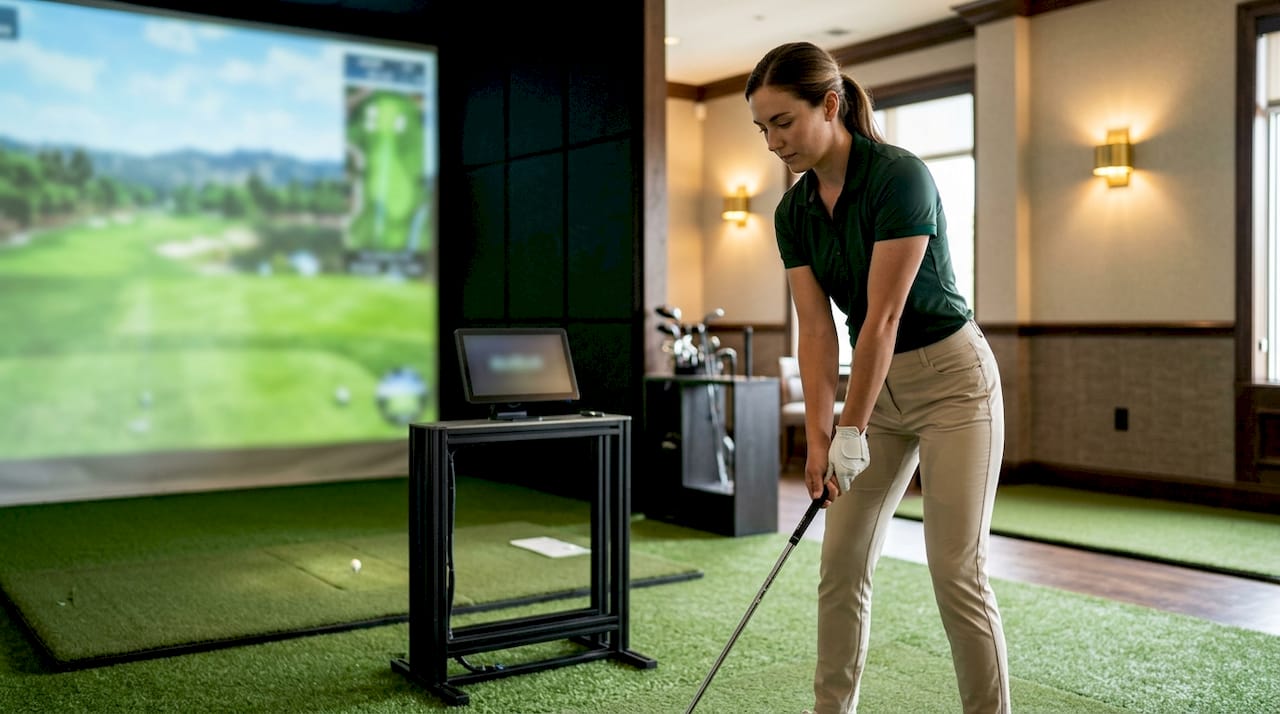
Course condition variables include green firmness, elevation changes, prevailing wind direction, and rough length. Each variable shifts your effective yardage by club. A golfer who carries a 7-iron 165 yards at sea level on a calm day may carry it 158 yards into a firm headwind at altitude. Mapping those adjustments before tournament week prevents in-round surprises.
Equipment standardization is the third pillar. Practicing with exact equipment for four or more weeks before a tournament lets your nervous system adapt to the feel and feedback of each club. Switching ball models or grips in the final week introduces unfamiliarity that shows up as errors under pressure.
Pro Tip: Use Sim2coursecaddie's My Bag feature to lock your club configuration at least three weeks out. Any change after that point needs a documented reason backed by shot data.
| Tool or input | Purpose |
|---|---|
| Simulator shot data | Establishes carry distances and dispersion by club |
| Course condition notes | Adjusts yardage expectations for wind, elevation, and firmness |
| Ball model standardization | Removes feel variables that cause inconsistency |
| Club bag configuration | Fixes your 14-club selection before tournament week |
| Sim2coursecaddie analytics | Connects practice data to course-specific recommendations |
How do you build a step-by-step workflow for tournament preparation?
The most effective workflow for tournament planning uses backward planning. You set the tournament date as your fixed endpoint, then assign specific tasks to each milestone working backward. Backward planning with milestones at four weeks, two weeks, one week, and the day before prevents the anxious, random cramming that kills consistency.
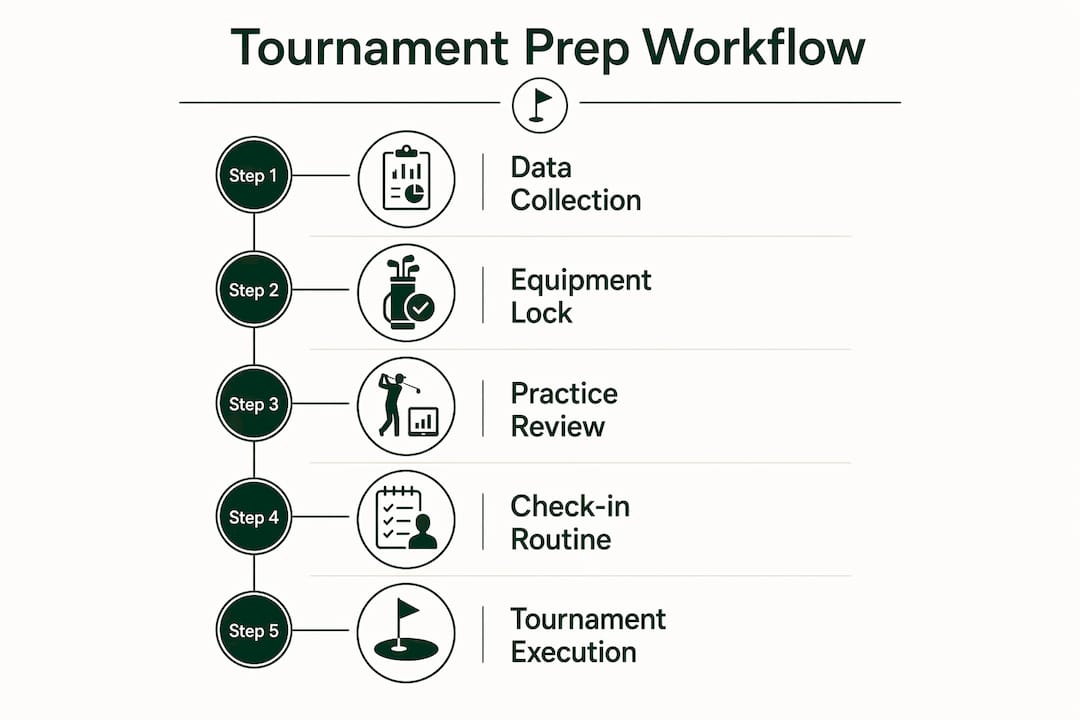
Here is a proven six-step workflow built around a four to six week window:
-
Weeks 5–6: Baseline assessment. Pull your last 90 days of shot data and identify your three weakest clubs by dispersion and distance consistency. These are your priority clubs for the prep window. Use Sim2coursecaddie's raw data view to sort by club and flag outliers.
-
Weeks 3–4: Core skill focus. Allocate the bulk of your practice time to the shot shapes and distances you will face most often on the tournament course. Research on training allocation shows that focusing on core tactical skills during this phase maximizes performance transfer. For golfers, that means approach shot patterns, not range warm-ups.
-
Weeks 3–4: Equipment lock-in. Finalize your 14-club bag. Confirm ball model. Do not change either unless shot data shows a clear performance gap. Standardizing now gives your nervous system four weeks to adapt.
-
Weeks 1–2: Match simulation drills. Replace isolated repetitive drills with high-intensity situational practice. Play simulated holes on your simulator using the tournament course layout. Make club decisions under time pressure. This transfers decision-making skill to competition conditions better than hitting the same shot 50 times in a row.
-
Day before: Light session and mental rehearsal. Keep the session under 45 minutes. Walk through your club recommendation checklist for tournament play: confirm yardages for each club, review course notes, and visualize three or four key shots on the course. Over-preparation in the 48 hours before a tournament causes mental fatigue that shows up as slow decisions on the course.
-
Tournament morning: Bag check and warm-up sequence. Verify your bag matches your locked configuration. Follow a structured warm-up starting with short irons and building to driver. Do not try to fix anything you notice in warm-up. The warm-up is confirmation, not correction.
Pro Tip: Write your club recommendation checklist on a physical card and keep it in your bag. Reviewing it the night before and the morning of competition builds a pre-performance routine that reduces anxiety.
What are common mistakes in club recommendation workflows and tournament prep?
The most damaging mistake competitive golfers make is changing equipment in the final week. A new shaft, a different ball, or a grip change introduced seven days before competition creates a feel mismatch that your nervous system cannot resolve in time. The performance drop is real and measurable.
The second most common error is overtraining in the final 48 hours. Tapering before competition with shorter, lighter sessions and prioritizing sleep produces better outcomes than cramming extra range time. Your body and mind need consolidation time, not more input.
Logistics failures are the third category. Arriving late, forgetting to confirm tee times, or discovering a club is missing from your bag on the first tee are all preventable with a checklist. These errors spike cortisol and impair decision-making for the first several holes.
Troubleshooting actions for each of these mistakes:
- Equipment change temptation: Run a side-by-side shot data comparison in Sim2coursecaddie before making any change. If the data does not show a clear improvement, keep your current setup.
- Overtraining signs: If you feel mentally flat or irritable two days before competition, cut your session in half and sleep eight hours. Fatigue at this stage does not respond to more practice.
- Logistics gaps: Build a tournament day checklist that covers bag contents, tee time, arrival time, and warm-up sequence. Review it two days out, not the morning of.
- Mental cramming: Stop reviewing course notes after dinner the night before. Your preparation is done. Trust the workflow.
"Tournament preparation success comes from a clear, repeatable routine focused on readiness rather than information accumulation in the final days."
How should you manage tournament day from a club usage perspective?
Tournament day execution is where your workflow either pays off or falls apart. The single most controllable variable is arrival time. Elite competitors arrive 60–90 minutes early for check-in and warm-up. Arriving late correlates directly with poorer mental and tactical performance in the opening holes.
A structured arrival gives you time to complete bag verification, complete a physical warm-up, and run a brief mental rehearsal before your tee time. Arriving 60 minutes before start allows a 20-minute structured warm-up that prevents anxiety and primes your decision-making. That 20 minutes is not optional for competitive golfers.
Club deployment during the round follows a simple rule: trust your pre-tournament data. If your shot data shows you carry a 6-iron 178 yards with a 12-yard dispersion, play to that number. Do not adjust mid-round based on one bad shot. Adjust only when conditions change materially, such as a wind shift of more than 10 miles per hour or a significant temperature drop.
Pro Tip: Write your three most reliable clubs and their carry distances on your scorecard before the round. When you face a pressure shot, reference the card rather than recalculating from memory.
| Routine element | Generic approach | Elite competitor benchmark |
|---|---|---|
| Arrival time | 20–30 minutes before tee | 60–90 minutes before tee |
| Warm-up structure | Hit balls until feeling loose | Structured sequence: short irons to driver |
| Mental preparation | None or informal | Light physical activity plus mental rehearsal |
| Bag verification | Assumed correct | Confirmed against locked checklist |
| In-round club decisions | Feel-based | Data-referenced from pre-tournament workflow |
Key takeaways
A structured club recommendation workflow built on real shot data, equipment standardization, and backward planning is the most reliable path to consistent tournament performance.
| Point | Details |
|---|---|
| Start four to six weeks out | Begin your prep window early enough to standardize equipment and build match-ready habits. |
| Lock your bag configuration | Finalize your 14-club setup at least three weeks before competition and document it. |
| Use backward planning | Set milestones at four weeks, two weeks, one week, and the day before to stay on track. |
| Taper the final 48 hours | Reduce session length and prioritize sleep to avoid mental fatigue on competition day. |
| Arrive 60–90 minutes early | Use the extra time for bag verification, physical warm-up, and mental rehearsal before your tee. |
What I've learned from watching golfers ignore their own data
Most competitive golfers I've observed have more data than they use. They hit thousands of balls on simulators, generate detailed shot reports, and then walk onto the first tee making club decisions based on how they feel that morning. The data sits unused. That gap between what golfers know and what they act on is where most tournament scores are lost.
The shift that actually changes results is treating your shot data as a standing recommendation, not a reference document. When Sim2coursecaddie tells you your 7-iron carries 162 yards with a left miss tendency, that is your club recommendation for every 162-yard approach until the data changes. You do not override it because you hit one good 7-iron in warm-up.
The second thing I've seen overlooked is the mental side of equipment consistency. Golfers who change clubs or balls late in prep are not just dealing with a physical adjustment. They are introducing doubt. Doubt is the one variable no workflow can compensate for once you are on the course.
The best tournament rounds I've seen from data-driven golfers share one trait: they made boring decisions. They hit the club the data said to hit, they played to their dispersion patterns, and they did not try to manufacture shots they had not practiced. Boring decisions under pressure are the product of a workflow that was built weeks earlier and trusted completely.
Personalize your workflow to your playing style, but do not personalize away the structure. The timeline, the equipment lock, the tapering, and the arrival protocol are not suggestions. They are the framework that makes everything else work.
— Jeff
How Sim2coursecaddie supports your tournament workflow
Competitive golfers who want their club selection process backed by real data have a clear starting point with Sim2coursecaddie. The platform is free to use and built specifically for golfers who take their simulator sessions seriously.
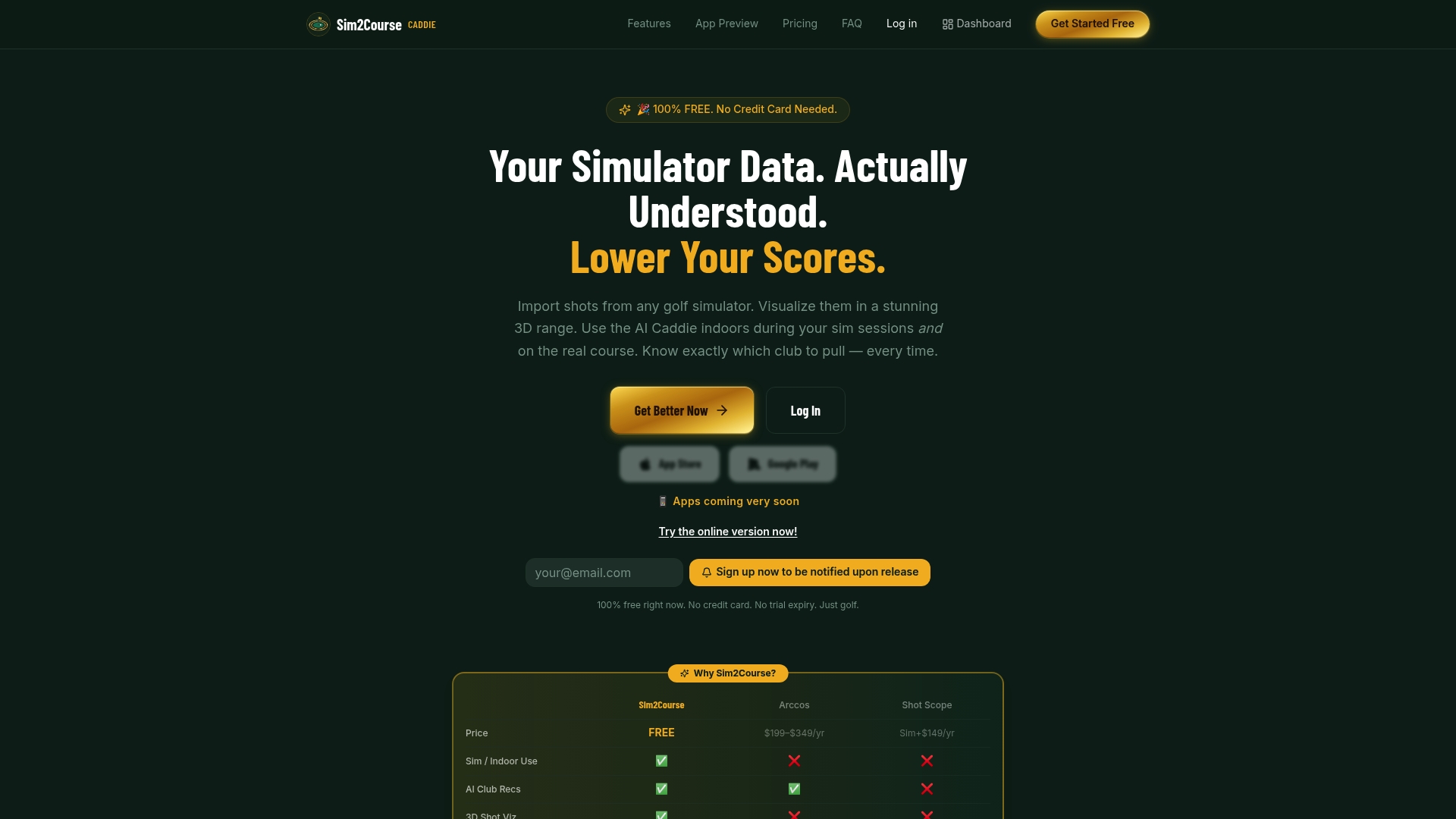
Sim2coursecaddie's 3D range analytics show your shot patterns by club in a visual format that makes dispersion and carry distance immediately readable. The My Bag tool lets you configure and lock your club setup based on your actual performance data, not manufacturer specs. For golfers who want deeper analysis, the raw data view gives you full access to every shot metric from your simulator sessions. All of it feeds directly into the kind of club recommendation workflow that produces consistent tournament results.
FAQ
How long before a tournament should I finalize my club selection?
Finalize your club bag at least three weeks before competition. Equipment standardization over four or more weeks gives your nervous system time to adapt and reduces match-day errors caused by unfamiliarity.
What is backward planning in a tournament preparation workflow?
Backward planning means setting your tournament date as the fixed endpoint and assigning specific tasks to milestones at four weeks, two weeks, one week, and the day before. This approach prevents random, anxious preparation and creates emotional consistency under pressure.
How early should I arrive on tournament day?
Arrive 60–90 minutes before your tee time. Elite competitors use this window for check-in, bag verification, a structured warm-up, and mental rehearsal, all of which reduce anxiety and improve early-round decision-making.
Should I practice heavily the day before a tournament?
Keep the session under 45 minutes and focus on confirmation, not correction. Over-preparation in the 48 hours before competition causes mental fatigue that slows decision-making during the round.
How does Sim2coursecaddie fit into a club recommendation workflow?
Sim2coursecaddie imports your simulator shot data and generates club-specific performance profiles including carry distance and dispersion. Those profiles become the data foundation for your club recommendation checklist and bag configuration before any tournament.