
Tracking misses in golf is the process of analyzing missed shots to improve overall consistency by focusing practice on corrective actions tied to specific error patterns. Most golfers treat a bad shot as bad luck. The ones who improve fastest treat every miss as data. Tracking and analyzing mistakes improves performance outcomes by 15–30% by focusing practice on recurring error patterns. That number reflects a simple truth: random practice produces random results, but targeted practice produces reliable ones. Sim2coursecaddie is built on exactly this principle, turning simulator shot data into a clear picture of where your game breaks down and why.
Why tracking misses improves consistency more than chasing perfection
The standard advice is to fix your swing. The better advice is to understand your miss. A predictable miss is the foundation of consistent golf, and most players never build one because they are too busy trying to eliminate all errors at once.
What is a "trusted miss" and why does it matter?
A trusted miss is a shot error you can predict, plan around, and manage on the course. Consistent golf play requires narrowing miss patterns to predictable, manageable areas, allowing smarter club and target selection that reduces risk. A short-right miss on approach shots, for example, tells you to aim left of the flag and take one extra club. A random miss, landing anywhere from the bunker to the trees, gives you nothing to work with.
Most golfers mistakenly try to eliminate all misses. A predictable miss is far better than random misses scattered across the course. The golfer who fades every iron shot has a trusted miss. The golfer who hits it straight sometimes and sideways other times has a problem.
Chasing perfection also creates a mental trap. When you expect every shot to be pure, one bad strike derails your focus for the next three holes. When you know your miss and have planned for it, a bad shot is just the expected outcome in a manageable direction.
Pro Tip: Play three rounds and note the direction of every missed green. If 70% of your misses cluster in one direction, that is your trusted miss. Build your course management around it before you try to fix it.
Here is what a trusted miss framework looks like in practice:
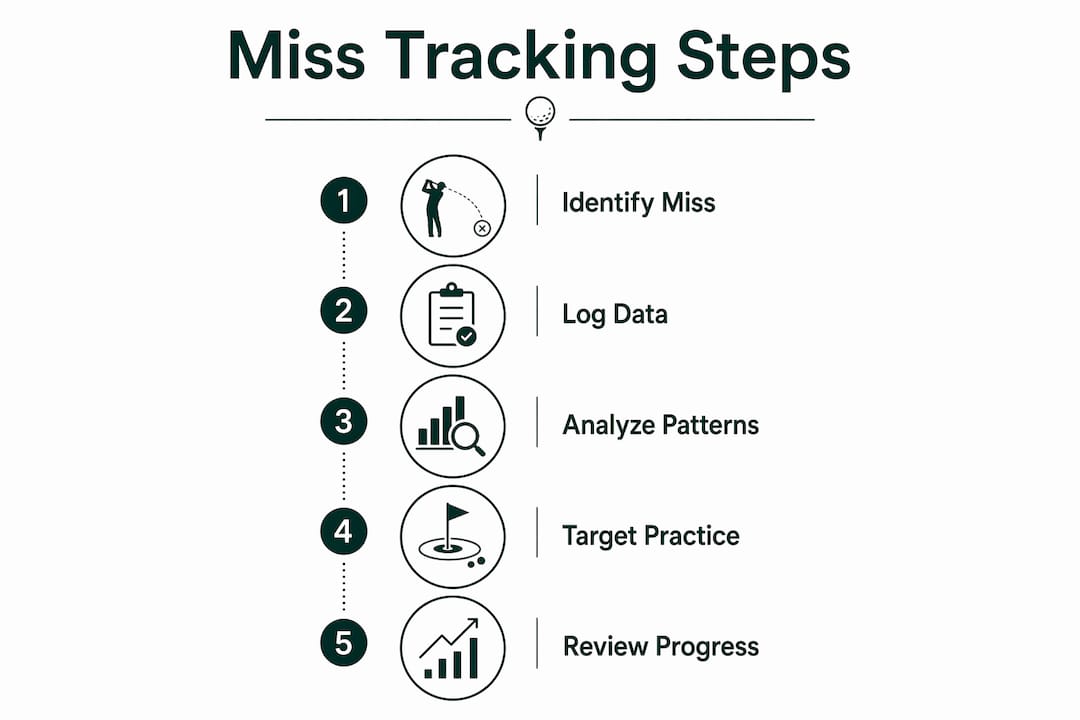
- Identify the pattern. Log miss direction and distance for at least two to three sessions before drawing conclusions.
- Categorize by club group. Your miss with a 7-iron may differ from your miss with a 3-wood. Track them separately.
- Plan around it on the course. Aim away from trouble that sits on your miss side. Take the safer line.
- Fix it in practice. Once the pattern is clear, targeted drills address the root cause rather than a symptom.
How does tracking missed shots reveal hidden consistency weaknesses?
Most golfers attribute a bad round to a bad day. Tracking reveals that the same three errors show up every single week. Most errors fall into 1–2 categories identifiable within 2–3 sessions. That means a golfer who tracks diligently for three rounds already has enough data to identify the core problem.
Execution errors vs. tactical errors
Not all misses are the same type of mistake. Execution errors happen when the swing breaks down: a fat strike, a heel contact, or a loss of tempo under pressure. Tactical errors happen when the swing is fine but the decision was wrong: taking on a carry over water with a club that only makes that distance 60% of the time, or aiming at a tight pin with no margin.

Effective miss tracking distinguishes between execution errors and tactical or environmental errors, preventing simultaneous confounding adjustments. If you change your aim and your swing grip at the same time, you will never know which fix worked.
Strike quality is one of the most underdiagnosed execution errors in amateur golf. Poor smash factor causes 15–20 yards of distance loss, detectable only by objective measurement. A golfer who feels like they hit a good shot but comes up 15 yards short is experiencing a strike quality problem, not a swing path problem. Tracking exposes this gap between feel and reality.
| Miss category | Common cause | Measurable effect |
|---|---|---|
| Short and right | Heel strike, low smash factor | 15–20 yards distance loss |
| Left pull | Closed face at impact | Missed greens left, penalty risk |
| Fat contact | Early extension, weight shift | Severe distance loss, inconsistent trajectory |
| Thin contact | Lifting through impact | Low ball flight, unpredictable distance |
| Tactical miss | Wrong club or target selection | Avoidable bogeys, poor course management |
Cognitive science research shows that correcting missed errors strengthens memory more effectively than reviewing successes, especially for confident errors. This is called the hypercorrection effect. When you log a miss and then deliberately practice the correction, the improvement sticks faster than if you simply hit more balls hoping for better results.
What are the best methods for tracking missed shots?
The method matters less than the consistency. A paper shot log used every session beats a sophisticated app used twice a month.
Building a personal miss tracking system
A practical miss tracking system does not need to be complicated. The goal is to capture enough data across multiple sessions to reveal patterns that a single round cannot show. Multi-session shot tracking leads to more predictable performance and skill development because single-session data is too noisy to act on.
Here is a straightforward system to start with:
- Log every miss immediately. Record club, miss direction, miss distance, and shot context (approach, tee shot, chip). Do this on the course or directly after a simulator session.
- Categorize each miss. Label it as an execution error or a tactical error before you move on. This forces honest self-assessment.
- Review after three sessions. Look for the 1–2 categories that appear most often. These are your priority areas.
- Track multiple clubs separately. Tracking multiple clubs reveals weaknesses that single-club analysis misses entirely.
- Make one change at a time. Multiple simultaneous adjustments obscure which fix worked. Isolate variables.
- Review session trends over time. Session-to-session trend analysis shows whether your corrections are holding or fading under pressure.
Golf simulators add a layer of objectivity that manual logs cannot match. They capture smash factor, launch angle, spin rate, and shot dispersion automatically. Performance analysis shows that strike quality issues cause most distance loss, so identifying and fixing them delivers greater gains than swing feel alone. A simulator gives you the numbers that feel cannot.
Pro Tip: Set a rule before each practice session: you are only working on one miss category today. Write it on a card and keep it in your pocket. Single-focus sessions produce faster corrections than general practice.
How do you apply tracking data to actually improve?
Data without action is just a list of failures. The conversion from tracked miss to real improvement requires a structured approach to practice design.
Error categorization and root cause analysis
The Mistake Audit method treats every wrong shot as a forensic investigation. Structured error logging reveals patterns that accelerate score improvement. For each miss category you identify, ask two questions: what caused it mechanically, and what decision led to it tactically? The answers point directly to the drill or course management adjustment you need.
Failing to analyze root cause leads to mislabeling misses as bad luck instead of diagnosing precise error types. This is the most common reason golfers plateau. They practice more without practicing smarter.
Spaced repetition accelerates the correction process. Instead of drilling the same fix for two hours in one session, practice it for 20 minutes across six sessions spread over two weeks. The brain consolidates motor patterns during rest, not during repetition. Spreading your correction work over time produces more durable improvement.
The behavioral science concept of "never miss twice" applies directly to golf improvement. A single error is a blip, but two consecutive misses signal a potential breakdown in consistency. When you track your practice sessions and notice the same miss appearing in back-to-back sessions, that is your signal to escalate the corrective work before the pattern hardens.
Here are the core habits that convert tracking data into real improvement:
- Weekly review sessions. Set aside 10 minutes after each week of play to review your miss log and identify the top category.
- Coach-assisted error review. Bring your miss data to a lesson. A coach who sees your patterns in data form can diagnose root causes faster than one who only watches you swing.
- Rolling window tracking. Rolling window habit tracking provides a stable consistency metric that encourages resumption after misses, avoiding the streak-break loss aversion that causes golfers to abandon their tracking system after a bad week.
- Celebrate pattern reduction. When a miss category drops from appearing in 8 out of 10 sessions to 3 out of 10, that is measurable progress worth recognizing.
Pro Tip: Print your top two miss categories on a small card and keep it in your bag. Before each round, read it. This primes your brain to notice those specific errors in real time rather than after the fact.
Key Takeaways
Tracking misses improves consistency because it converts vague frustration into specific, fixable patterns that targeted practice can address session by session.
| Point | Details |
|---|---|
| Trusted miss over perfection | Build a predictable miss pattern first; use it for course management while you fix it in practice. |
| Error categorization matters | Separate execution errors from tactical errors before making any swing or strategy change. |
| Multi-session data is required | Single-round data is too noisy; track across 2–3 sessions to identify real patterns. |
| One change at a time | Making multiple simultaneous adjustments hides which fix worked and slows improvement. |
| Apply the "never miss twice" rule | Two consecutive misses in the same category signal a pattern that needs immediate corrective focus. |
Why most golfers skip the one thing that would help them most
I have watched golfers spend thousands of dollars on new equipment and hours on the range without improving their scores by a single stroke. The missing piece is almost always the same: they have no idea what their actual miss pattern is.
The mental shift required to embrace miss tracking is harder than it sounds. Golfers are emotionally attached to their good shots. Logging misses feels like dwelling on failure. But the golfers who break through plateaus are the ones who treat their bad shots as the most valuable information they collect all week.
I have seen players who were stuck at the same handicap for three years drop four strokes in a single season once they started tracking. Not because they found a new swing tip, but because they finally understood that 80% of their dropped shots came from two fixable patterns they had been ignoring. The data was always there. They just were not looking at it.
The discipline to track, review, and act on miss data is what separates players who improve from players who just play more. More rounds without feedback is not practice. It is repetition of the same mistakes at a higher volume.
— Jeff
How Sim2coursecaddie turns your miss data into a practice plan
Golfers who track their misses manually get results. Golfers who track them with the right tools get results faster.
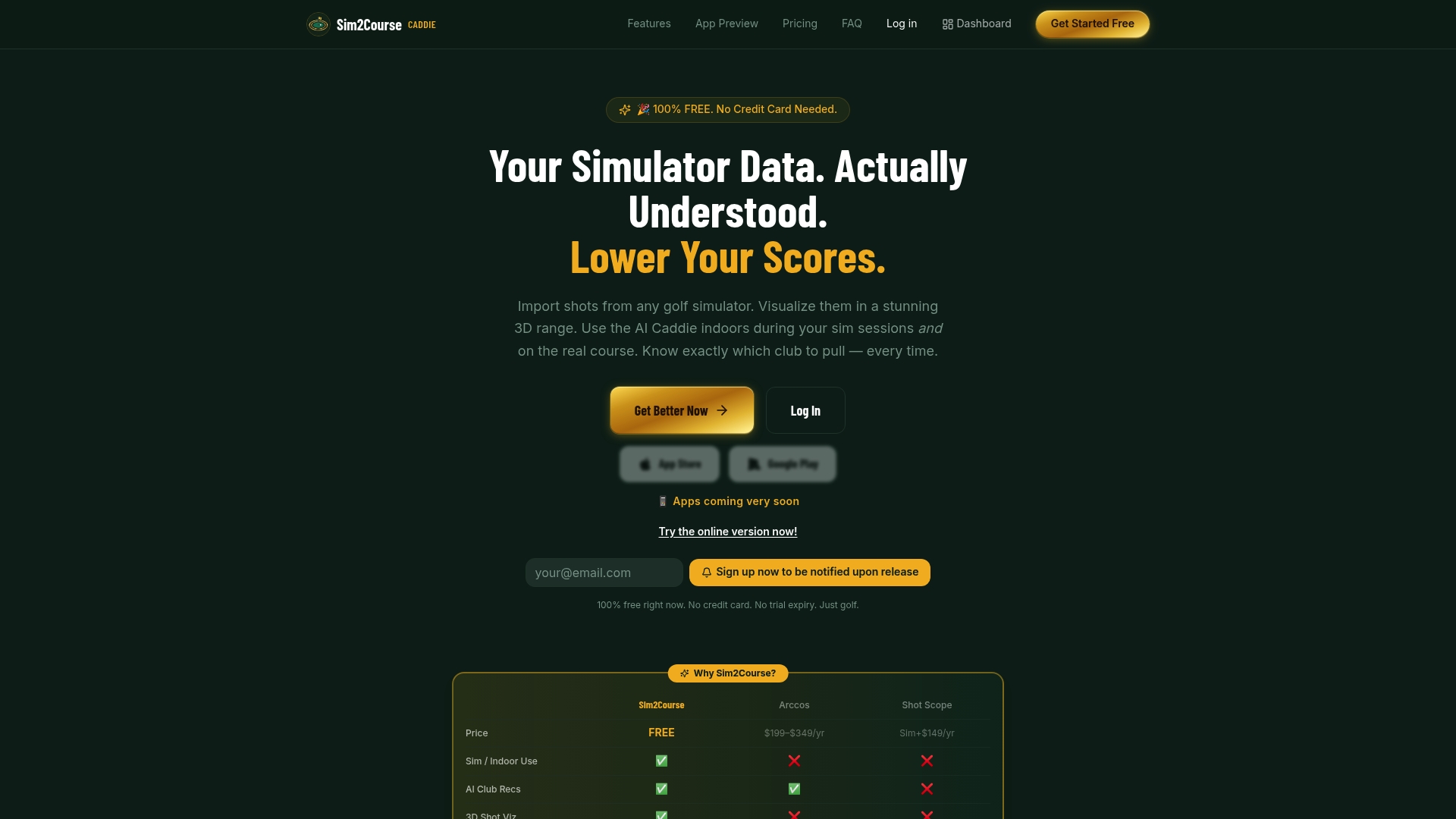
Sim2coursecaddie connects directly to your golf simulator sessions and captures shot data automatically, so you are not relying on memory or handwritten notes after a round. The platform visualizes your shot dispersion in a 3D driving range view, making miss patterns visible at a glance. Its AI-driven club recommendations factor in your actual miss tendencies, not generic averages, so the advice fits your game. You can analyze your shot data across multiple sessions and clubs without paying for a subscription. For golfers serious about improving consistency through tracking, Sim2coursecaddie removes the friction between collecting data and acting on it.
FAQ
What does tracking misses mean in golf?
Tracking misses means logging every missed shot by direction, distance, and club to identify recurring error patterns. The goal is to convert vague inconsistency into specific, fixable problems.
How many sessions does it take to identify a miss pattern?
Most error patterns become identifiable within 2–3 sessions. Tracking across multiple rounds gives you enough data to separate genuine patterns from one-off mistakes.
What is a trusted miss in golf?
A trusted miss is a predictable shot error you can plan around on the course. A consistent fade or short-right miss is manageable; a miss that lands anywhere is not.
Should I fix my miss or manage it on the course?
Both. Manage your trusted miss on the course by aiming away from trouble on your miss side. Fix it in practice by isolating the root cause and drilling one correction at a time.
How does strike quality affect my miss pattern?
Poor strike quality, measured by smash factor, causes 15–20 yards of distance loss that feel alone cannot detect. Objective tracking tools reveal strike issues that explain why shots come up short even when the swing feels solid.