
The short answer: a 3 iron club suits experienced golfers with consistent swing speeds above 90 mph who want a penetrating, workable ball flight, especially in wind. Most recreational players hit a 3-hybrid or 5-wood farther and more consistently. If you're still deciding, the rest of this article walks through every current model worth considering, a practical simulator test protocol, and exactly how to make the call with your own shot data.
A three iron is the longest iron in a standard set, typically lofted between 19° and 21°, producing a lower, more piercing trajectory than hybrids or fairway woods. According to BBC Sport, traditional long irons historically cover roughly 170–190 yards. Modern hollow-body construction has made them more playable, but they still demand a consistent, repeatable swing.
Quick alternatives if you're already leaning away from a 3-iron:
- 3-hybrid: higher launch, more forgiveness, easier to hit from rough
- 5-wood or 7-wood: maximum launch height and carry for slower swing speeds
- Driving iron or utility iron (e.g., Titleist U505, PING iDi): iron-like control with added stability, popular on Tour
Key Takeaways
A 3-iron suits players with consistent swing speeds above 90 mph who prioritize trajectory control and workability, especially in wind; most recreational golfers get better results from a hybrid or fairway wood.
| Point | Details |
|---|---|
| Who benefits from a 3-iron | Players with 90+ mph swing speeds, playing in wind or on firm courses, who shape shots intentionally. |
| Modern alternatives | Driving irons (Titleist U505, PING iDi) offer similar control with more forgiveness; hybrids suit slower swingers. |
| Test before committing | Run 20–30 shots on a simulator and compare carry SD and dispersion against your hybrid before deciding. |
| Buying options | New OEM runs $180–$280; used demos on GlobalGolf or 2nd Swing cut that cost by 40–50%. |
| Sim2coursecaddie | Free analytics let you import simulator sessions and run the A/B comparison to validate your 3-iron decision. |
Table of Contents
- What 3 iron golf clubs should you actually consider buying?
- How does a 3-iron actually perform on the course?
- How to choose and fit a 3-iron before you buy
- What commonly replaces a 3-iron and when should you switch?
- How to hit a 3-iron well: setup and swing keys
- Where to find a 3-iron in the U.S.
- How to use shot data to decide if a 3-iron belongs in your bag
- When I actually keep a 3-iron in the bag
- Sim2coursecaddie makes the 3-iron decision data-driven
- Sources
What 3 iron golf clubs should you actually consider buying?
The market splits into three tiers: traditional long irons, modern driving/utility irons, and budget or used options. Here's the shortlist that covers the full range, followed by a comparison table.
Premium driving irons and utility irons (new OEM):
A utility iron like the Titleist U505 blends iron-like control with a slightly higher launch than a blade. A player-focused iron with options for custom loft specs, the Titleist T200 offers similar features. The PING iDi driving iron delivers a low-launch, workable shape with enough forgiveness to be practical. Cobra KING driving irons emphasize distance and low spin, holding their line well in crosswinds. Srixon's ZXiU utility iron features a compact hollow-body profile that shot-makers tend to prefer. Two Tour-proven options from TaylorMade include a hybrid-iron crossover and a driving iron built for speed.
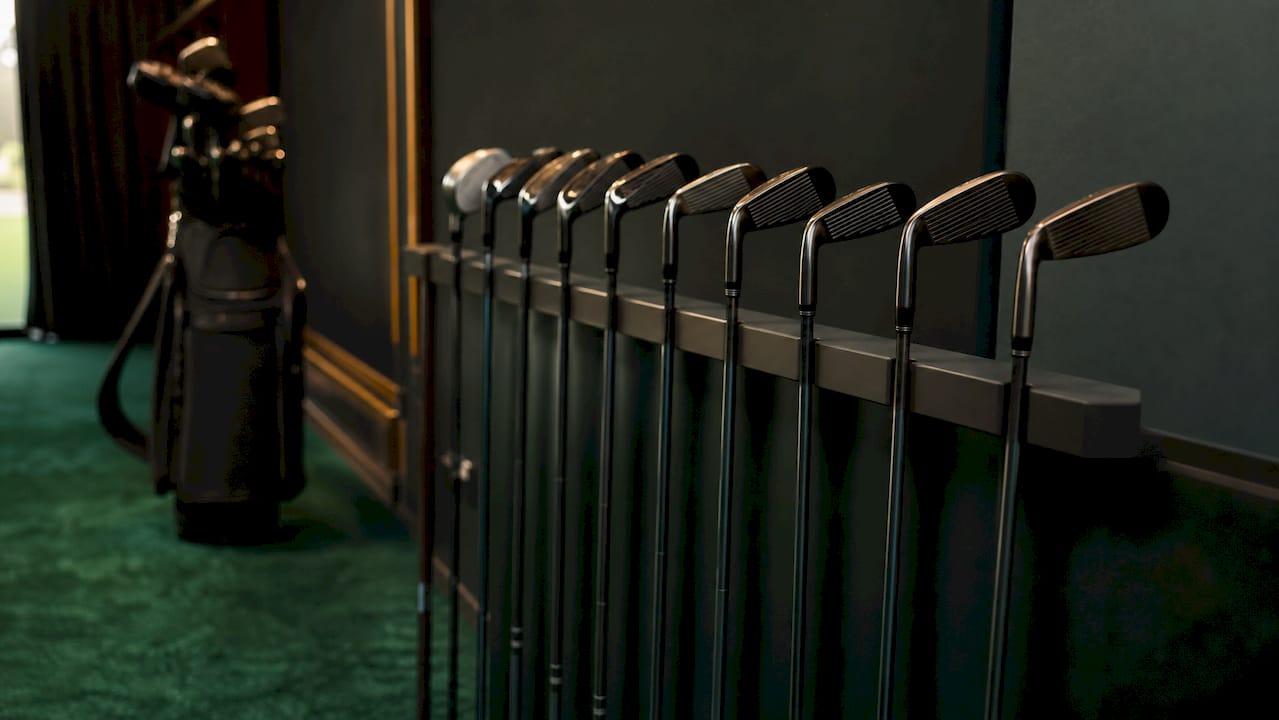
Several modern iron sets offer traditional 3-iron feel configurations suitable for experienced players. The Callaway Golf Big Bertha BB23 individual iron and Callaway Elyte individual irons are available as single-iron purchases, which matters if you only want to fill one slot. The Build a Custom TaylorMade 2023 P790 #3 and Build a Custom TaylorMade P790 2021 #3 let you spec a single iron to your exact shaft and loft preferences. TaylorMade publishes exact loft, length, and swingweight specs for their 3-iron models, and PING documents Power Spec and Retro Spec fitting configurations that let you tune distance or precision at the fitting stage.
Value and budget options:
Tour Edge Hot Launch C523 irons, Maxfli XC1 and XC3 irons, and the COOLO Golf Driving Iron are solid choices for cost-conscious players. MAZEL offers several individual iron options (Single Length Golf Club Irons Set, WM-X1/2, and individual irons) at accessible price points. The XM-01 individual iron set and Gowolf Golf Iron Set are budget-friendly alternatives for players testing whether a long iron suits their game before committing to a premium model. Dynacraft Golf Club Driving Irons for Men and the PGM Rio 7 Iron Golf Club for Men round out the entry-level category.
Complete sets that include a 3-iron or long iron:
Tommy Armour Men's EVO Titanium 16-Piece Complete Set, Tommy Armor Varsity EVO Titanium 13-Piece Complete Set, and Tommy Armor Women's EVO Titanium 16-Piece Complete Set include long irons as part of a full bag solution. XXIO 14 Custom Irons, XXIO Women's 14 11-Piece Set, and XXIO Women's 14 10-Piece Set target players who want premium lightweight construction. PING Women's i230 Irons and Cobra KING Tour Irons are worth noting for players who want a women's or tour-spec iron set with a 3-iron option. The Srixon Limited Edition All-American ZXi5/7 Iron Combo Set pairs two iron profiles in one set for players who want blade-like feel in the short irons and more forgiveness in the long irons. U.S. Kids Golf Tour Series 6 sets (57", 60", 63", and 66" versions) are the right call for junior golfers who need properly fitted long clubs.
Retailer availability: DICK'S Sporting Goods stocks a wide range of 3-iron golf clubs new, including Titleist, PING, Cobra, and Callaway. GolfRoots carries new and demo options. For used clubs, GlobalGolf, 2nd Swing, and eBay are the primary sources, with condition grading and return policies that vary by seller. Maxfli XC irons are a DICK'S house brand, making them easy to find in-store.
Pro Tip: Before buying new, check 2nd Swing or GlobalGolf for certified pre-owned versions of premium models. A used Titleist U505 or PING iDi in "very good" condition often runs 40–50% below new OEM pricing.
How does a 3-iron actually perform on the course?
Loft is the starting point. Most 3-irons sit between 19° and 21°, though modern driving irons sometimes push as low as 17°. That lower loft produces a flatter, more penetrating flight compared to a 3-hybrid (typically 19–21° but with more offset and a larger head that launches higher).
| Spec | Traditional 3-Iron | Driving Iron | Utility Iron |
|---|---|---|---|
| Loft range | 19–21° | 17–19° | 17–19° |
| Typical shaft length | 38.75–39.25" | 38.75–39.25 inches | 38.75–39.25" |
| Expected carry (90+ mph) | 170–190 yards | 185–200 yards | 180–195 yards |
| Expected carry (below 90 mph) | 155–170 yards | 170–190 yards | 170–190 yards |
| Launch angle | Low | Very low | Low-mid |
| Workability | High | High | Moderate-high |
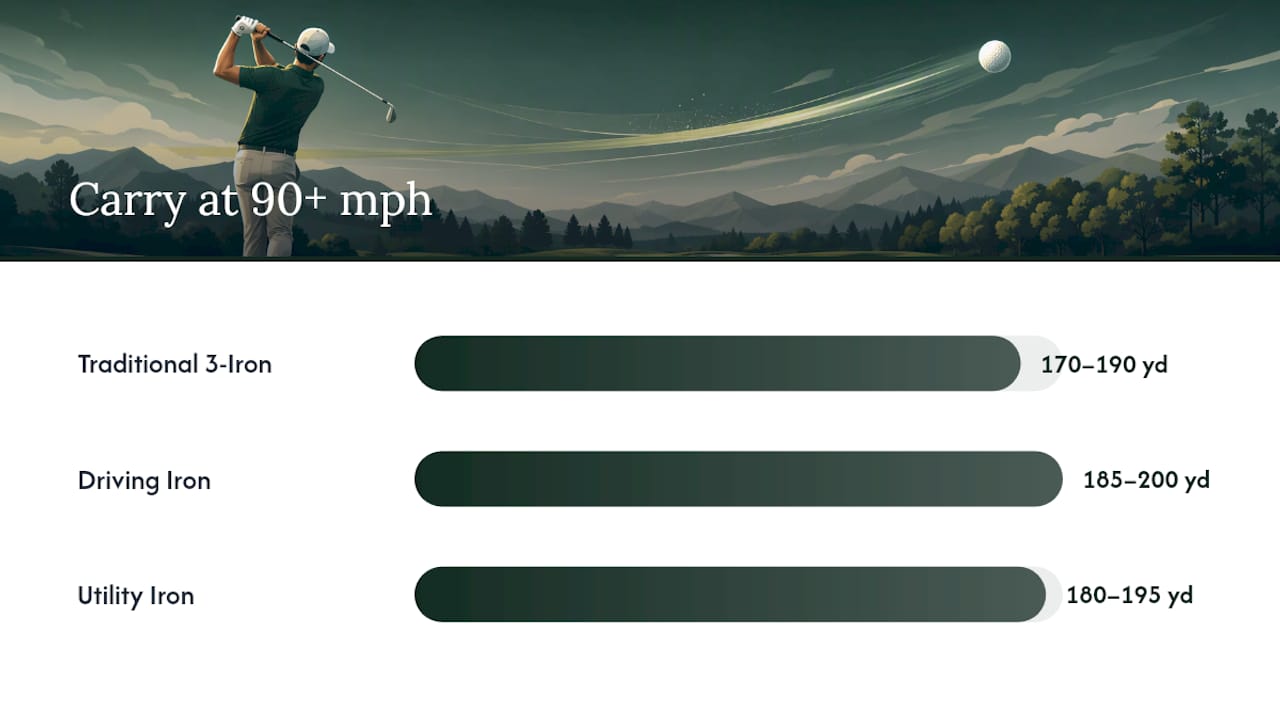
The 170–190-yard carry range cited by BBC Sport for traditional long irons is typical for players swinging at or above 90 mph. Carry distances will generally be lower for those with slower swing speeds.
Where a three iron golf club genuinely earns its spot:
- Links-style or firm-condition courses where a low, running shot is an asset
- Windy rounds where a hybrid's higher launch becomes a liability
- Tight par-4 tee shots where you need iron-like accuracy at 3-wood distances
- Players who shape shots and want a workable club at the long end of the bag
PGA Tour player Austin Eckroat is a real-world example: he kept a PING Blueprint S 3-iron specifically for its predictable control and lower peak height in windy conditions. That's the profile. If wind and trajectory control aren't priorities for your typical round, a hybrid almost certainly serves you better.
Pro Tip: Run at least 20 shots with a launch monitor before committing. Track not just carry distance but standard deviation. A 3-iron that averages 185 yards but scatters 20+ yards shot to shot is costing you strokes, not saving them.
How to choose and fit a 3-iron before you buy
Fitting matters more for a 3-iron than for almost any other club, because the margin for error on a long iron is smaller. A shaft that's too stiff or a lie angle that's a degree off will show up in your dispersion immediately.
Key fitting variables:
- Swing speed: Players below 85 mph generally struggle to compress a 3-iron consistently. If that's you, a hybrid or 5-wood is the more honest choice.
- Shaft material and flex: Steel shafts (stiff or X-stiff) suit faster swingers who want feedback and control. Graphite shafts reduce vibration and can help players with slower tempos or joint issues generate more speed.
- Lie angle: A flat lie angle tends to produce a draw; an upright lie promotes a fade. Get this measured on a lie board during a fitting, not guessed.
- Loft and length: Standard 3-iron length runs 38.75–39.25 inches. Custom lofting (Power Spec or Retro Spec, as PING calls it) can shift your carry distance up or down without changing the club number.
- Grip size: Oversized grips reduce hand action and can help players who tend to hook long irons.
Used-club inspection checklist:
- Check the face for deep grooves, cracks, or impact marks outside the sweet spot.
- Verify loft and lie with a loft/lie machine before purchase if possible.
- Inspect the hosel for any signs of re-shafting (epoxy residue, uneven finish).
- Flex the shaft gently and look for any kinks or flat spots.
- Check the grip for wear, hardness, or slipping.
New OEM 3-irons from Titleist, PING, or TaylorMade typically run $180–$280 for a single iron. Custom-built options like the TaylorMade P790 #3 single iron can run higher depending on shaft selection. Used demos from 2nd Swing or GlobalGolf often cut that cost significantly. Investing in quality gear pays off most when the club is properly fitted, not just purchased.
Pro Tip: Ask for a demo fitting at a local PGA Superstore or Golf Galaxy before buying. Most locations will let you hit multiple 3-iron options on a launch monitor at no charge, which is the fastest way to confirm shaft flex and loft before spending.
What commonly replaces a 3-iron and when should you switch?
GolfWRX's analysis of the "death of the 3-iron" traces a clear shift: most amateur bags now carry a 4-iron or 5-iron as the longest iron, with hybrids and fairway woods filling the gap above. The question isn't whether alternatives exist. It's which one fits your game.
| Club | Launch | Forgiveness | Workability | Best Scenario |
|---|---|---|---|---|
| Traditional 3-iron | Low | Low | High | Wind, firm lies, shot-shaping |
| Driving iron / utility iron | Low | Moderate | High | Wind + more forgiveness than blade |
| 3-hybrid | Mid-high | High | Moderate | Rough, soft conditions, slower swing speeds |
| 5-wood | High | Very high | Low | Maximum carry, slower swingers |
| 7-wood | Very high | Very high | Low | Replacing long irons entirely for seniors/high handicaps |
Scenarios that favor each:
- Keep the 3-iron if you play in wind regularly, carry it 180+ yards consistently, and shape shots intentionally.
- Switch to a driving iron or utility iron (Titleist U505, PING iDi, Srixon ZXiU, TaylorMade Stealth UDI) if you want iron-like control but need a bit more forgiveness on mishits.
- Go hybrid if you struggle to launch the ball from tight lies or rough, or if your swing speed sits below 88 mph.
- Go 5-wood or 7-wood if your priority is maximum carry and you don't need to shape shots at that distance.
MyGolfSpy's data-driven analysis makes the case plainly: most amateurs achieve better effective distance and tighter dispersion with hybrids or fairway woods. The 3-iron is not a bad club. It's a demanding one.
How to hit a 3-iron well: setup and swing keys
A 3-iron punishes setup errors more than a 7-iron does. Get these right before worrying about swing mechanics.
Setup checklist:
- Ball position: one ball width inside your left heel (for right-handed players), slightly forward of center.
- Stance width: shoulder-width, slightly narrower than a driver stance.
- Shaft lean: hands ahead of the ball at address, creating 2–3° of forward lean.
- Weight distribution: 55–60% on the lead foot at address.
- Posture: bend from the hips, not the waist; keep the spine relatively straight.
Swing keys for solid contact:
- Sweep the ball rather than hitting steeply down. A 3-iron needs a shallower angle of attack than a wedge.
- Maintain tempo. Trying to swing harder almost always produces thin contact or a pull.
- Keep the lead wrist flat through impact. A cupped lead wrist delofts the club and produces thin, low shots.
- Finish fully. Players who decelerate through a long iron are the ones who skull it.
Common mistakes:
- Thin shots: Usually caused by early extension (standing up through the ball) or a steep attack angle. Fix by feeling like you're brushing the turf after the ball.
- Hooks: Often a grip that's too strong combined with an inside-out path. Weaken the grip slightly and check alignment.
- Slices: Typically an open clubface at impact. Check grip pressure and ensure the face is square at the top of the backswing.
Pro Tip: Practice with a tee under the ball at first. It removes the fear of thin contact and lets you focus on tempo and path. Once you're making clean contact off the tee consistently, move to tight lies.
Where to find a 3-iron in the U.S.
New and retail:
- DICK'S Sporting Goods: Stocks Titleist, PING, Cobra, Callaway, Srixon, and house-brand Maxfli XC options in-store and online. Good for same-day purchases and easy returns.
- GolfRoots: Carries new and demo options with a focus on fitting-friendly inventory.
- PGA Superstore / Golf Galaxy: Both offer demo days and launch monitor fittings, making them the best option if you want to test before buying.
- Manufacturer direct (TaylorMade, PING, Titleist, Callaway): Custom-build options like the TaylorMade P790 #3 single iron or PING Blueprint T with Power/Retro Spec are only available through manufacturer sites or authorized fitters.
Used and demo:
- GlobalGolf: Condition-graded used clubs with clear photos and a return policy. Good for finding Titleist T200 Used Demo or PING iDi at reduced prices.
- 2nd Swing: Trade-in and certified pre-owned inventory with consistent grading. Often the best source for premium used driving irons.
- eBay: Widest selection, but condition grading is seller-dependent. Stick to sellers with strong feedback and clear return policies.
Pro Tip: Check the headcover situation when buying used. A driving iron or utility iron without a headcover is more prone to bag chatter damage than a standard iron, and replacement covers for specific models can be hard to source.
How to use shot data to decide if a 3-iron belongs in your bag
The most reliable way to answer the 3-iron question isn't reading reviews. It's running a structured simulator test and comparing the numbers to your existing clubs. Personal shot data is the clearest guide to club selection, and this protocol gives you a repeatable framework.
Test protocol:
- Hit 20–30 shots with your 3-iron (or a demo) on a launch monitor or simulator. Use your normal swing intent, not a "try hard" swing.
- Record carry distance, total distance, launch angle, ball speed, spin rate, and lateral dispersion for each shot.
- Repeat the same 20–30-shot block with your current longest iron (4-iron or 5-iron) and your 3-hybrid or 5-wood.
- Calculate mean carry and carry standard deviation for each club.
- Compare the gap between your 3-iron mean carry and your 3-wood mean carry. A consistent 10–20-yard gap between clubs justifies keeping the 3-iron.
| Metric | What to Capture | Practical Target |
|---|---|---|
| Mean carry distance | Average of all 20–30 shots | Consistent gap vs. next club up/down |
| Carry SD (dispersion) | Standard deviation of carry | Under 10 yards for a keeper |
| Lateral dispersion | Left-right spread | Under 25 feet for a keeper |
| Launch angle | Average launch | 19–21° for a 3-iron |
| Spin rate | Average spin | 4,000–5,500 rpm for a 3-iron |
| Ball speed | Average ball speed | Consistent across shots |
MyGolfSpy's data analysis recommends running the same shot profile with a hybrid and a 3-iron at the same swing intent, then comparing mean carry and dispersion before making a bag decision. If your hybrid produces a tighter dispersion band at similar carry distances, the data is telling you something. Comparing simulator sessions side by side is the clearest way to see that difference.
Pro Tip: Use Sim2coursecaddie's free analytics to import your simulator session data and run the A/B comparison across multiple sessions. A single session can be misleading; three sessions across different days gives you a reliable signal on whether the 3-iron fills a real gap or just overlaps with what you already carry.
When I actually keep a 3-iron in the bag
Playing a links-style course in coastal wind changes the calculus entirely. A 3-hybrid that normally flies 195 yards can balloon to 210 or drop to 175 when the wind shifts. A 3-iron with its lower, more penetrating flight holds its line. The distance is more predictable, and the lower peak height means the wind has less time to push the ball offline.
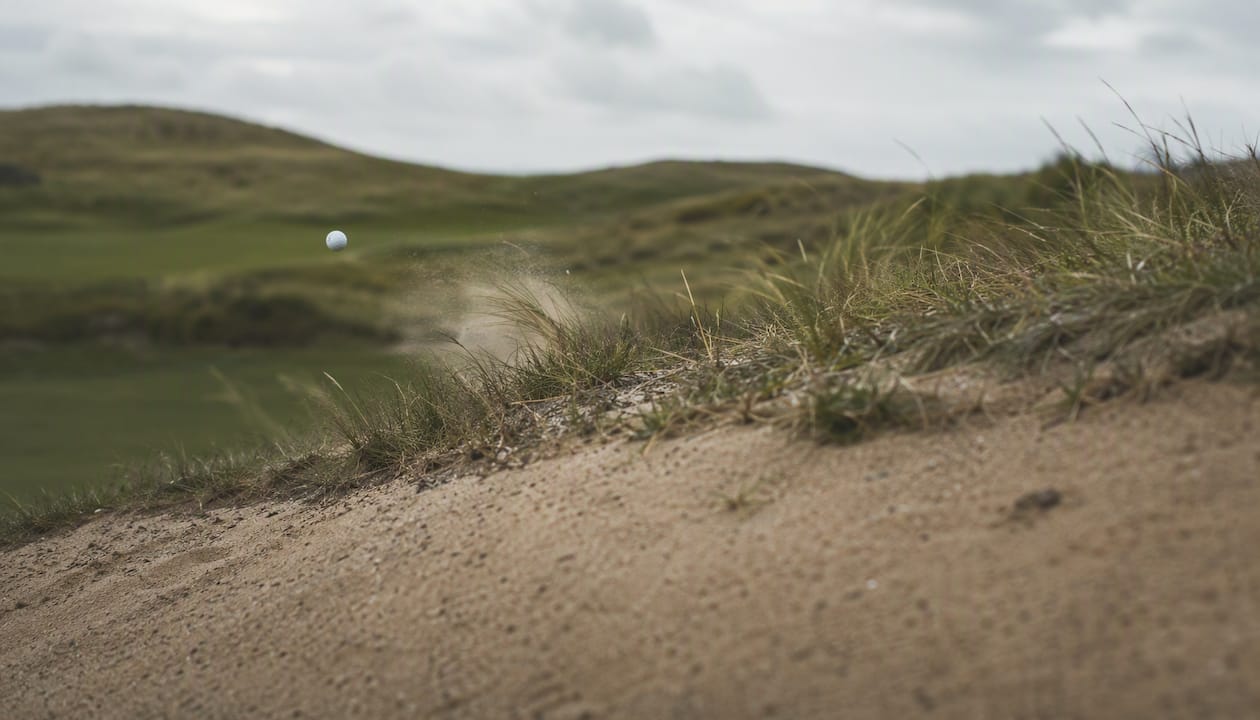
The practical takeaway: if your home course or most-played courses are exposed to consistent wind, test the 3-iron in those conditions specifically, not just on a calm indoor simulator session. The gap between a hybrid and a 3-iron in calm conditions often disappears in 20 mph crosswinds. Tracking multiple clubs across conditions is what reveals that difference in your own data.
Sim2coursecaddie makes the 3-iron decision data-driven
You've read the models, the specs, and the test protocol. The missing piece is your own numbers. Sim2coursecaddie's free analytics let you import shot data from any simulator or launch monitor, visualize your dispersion in a 3D range, and compare clubs across sessions without paying for additional hardware.
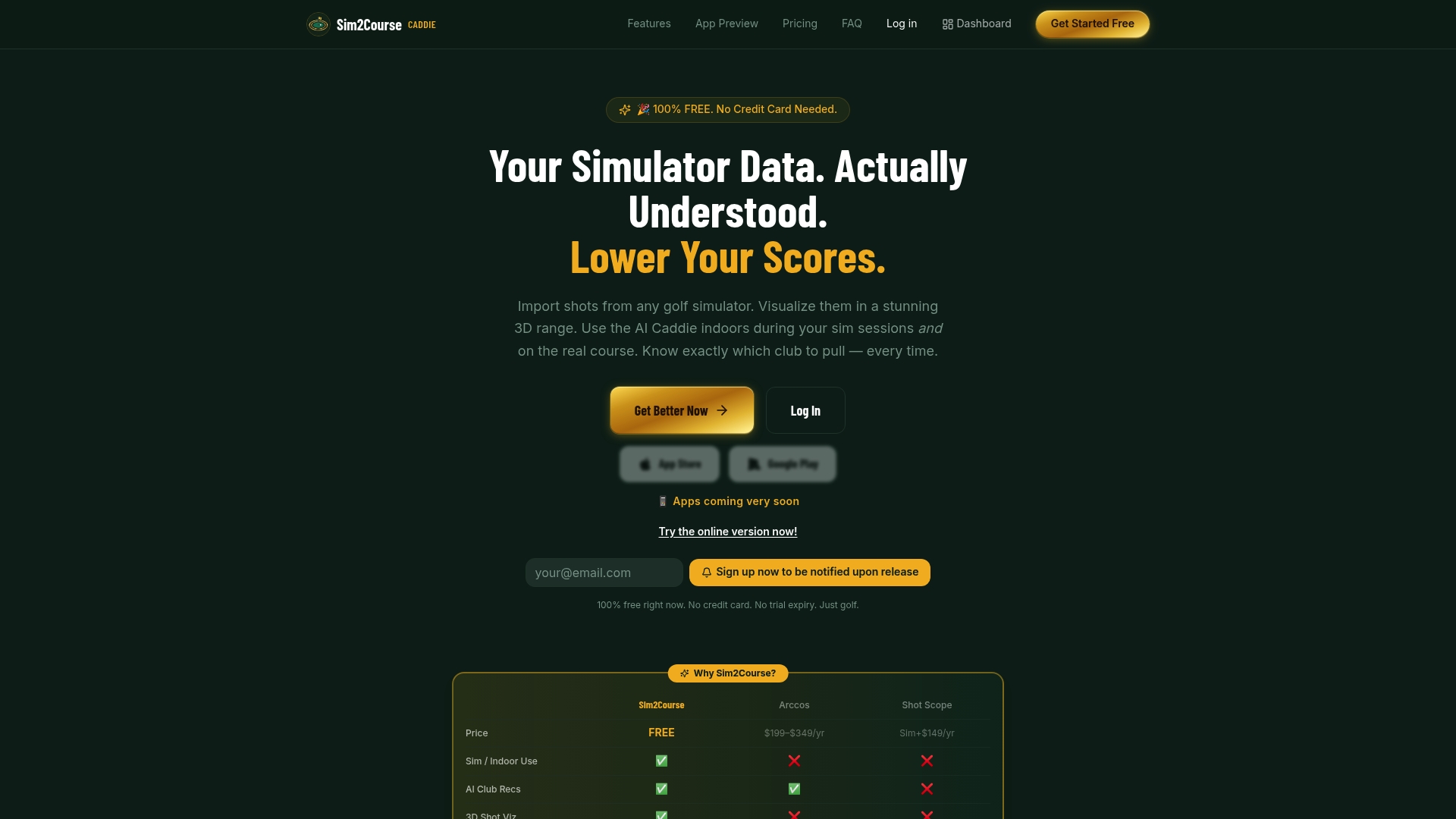
The free tier covers carry distance tracking, dispersion analysis, and multi-club comparison. The Pro plan ($1/month or $9.99/year) adds live GPS caddie features and AI-driven club recommendations tied to real-time course conditions, so the data you gather in practice translates directly to on-course decisions. Import your 3-iron and hybrid sessions, run the A/B comparison from the protocol above, and let the numbers tell you which club belongs in your bag. Start with the free analytics at Sim2coursecaddie and import your first session today.
Sources
- Why this recent Tour winner carries a seldom-seen club
- Golf clubs: 3 iron | BBC SPORT
- 3 Iron Golf Clubs | DICK'S Sporting Goods
- The Truth About the 3-Iron: Here's What the Data Says | MyGolfSpy
- The death of the 3-iron and what it means for your bag setup
- P770 3 Iron | TaylorMade
- Blueprint T Irons | PING
Always cross-reference manufacturer loft and shaft charts against your own launch monitor data, and confirm local demo availability before purchasing.